

Afghanistan: Interview about work for children and women
To implement projects promoting the rights of children and women, Terre des Hommes partner organizations rely on the support of religious leaders and local authorities. Dealing with them requires considerable tact – and not just since the Taliban seized power. The staff of the Afghan Women Educational Centre (AWEC) have extensive experience in this area and are therefore able to continue their work, albeit unofficially and behind the scenes. In this interview, one of them discusses the challenges of working for women and children after the Taliban's takeover.
How are girls and women in Afghanistan faring under the Taliban regime?
Their rights are severely restricted. Girls are generally not allowed to attend secondary schools or universities, and women are excluded from most jobs. However, a few still work, for example in hospitals.
A major problem is the so-called mahram: women are only allowed on the streets when accompanied by male relatives or husbands. This often prevents them from seeing a doctor in time, let alone participating in public life, education, or earning a living. The Taliban abolished the "Ministry of Women's Affairs" and reinstated the "Ministry for the Propagation of Virtue and the Prevention of Vice." Many women report being threatened because of their protests against the restrictions on women's rights.
Are the same people still working at AWEC as a year ago, or did some have to leave the country?
Some have left the country. They sometimes support and advise newly hired colleagues from outside.
What role do religious leaders and the Shuras, i.e., Islamic councils, play in the successful implementation of the project?
Their role is very important, especially in rural areas, as their statements carry great weight in the communities . Our colleagues often meet with religious leaders to discuss topics such as child marriage or violence against women and children. Fortunately, the Shuras have supported our work, and our relationships with them have proven valuable even after the Taliban seized power.
And what about the local authorities? Have the rules and employees changed since the Taliban took power?
In most cases, yes. But we still work with them. We respect the cultural values and customs of the communities and try to situate women's and children's rights within the framework of the Islamic religion in order to facilitate communication with the de facto authorities.
An important part of the Terre des Hommes project is education for girls and women. Did the content and style of teaching have to be changed?
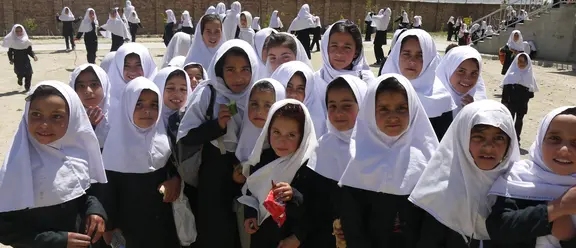
In Paktika province, our primary school courses for both girls and boys are running as planned. Fortunately, there are no restrictions on girls' primary education. So far, the local authorities have not interfered. However, they would like us to incorporate Islamic values into our lessons.
And the older girls?
Women's rights activists and families are putting pressure on the Taliban to reopen secondary schools for girls. Girls need to learn and deserve support in doing so. But unfortunately, the Taliban have not yet made any clear statements on the matter.
The project also includes nine-month university preparation courses…
We've started this, but unfortunately, girls aren't allowed to participate yet. We hope this will change and that we'll see girls in the classrooms in the future.
Another part of the project is teacher training on children's and women's rights…
We successfully implemented this. We were also able to provide further training for many teachers in the areas of didactics, lesson planning, classroom management, and child protection.
In which professions are women trained?
We train women in tailoring and embroidery. There are no obstacles.
What is the situation of internally displaced persons and returnees?
They suffer from food insecurity, poverty, climate fluctuations, and a lack of educational facilities. The Taliban regime does not care about them, and many international aid organizations have left Afghanistan.
AWEC wanted to carry out many campaigns: for example, for girls' education, against corporal punishment in schools, against child marriage, and against child labor. Is this currently possible?
Yes, it's still possible. But we need to use vocabulary that those in power can accept.