

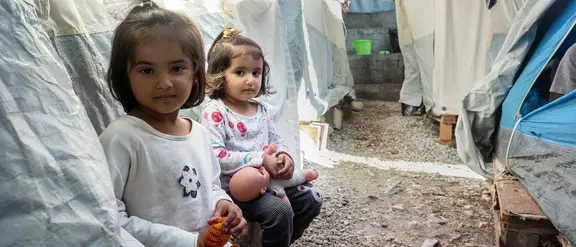
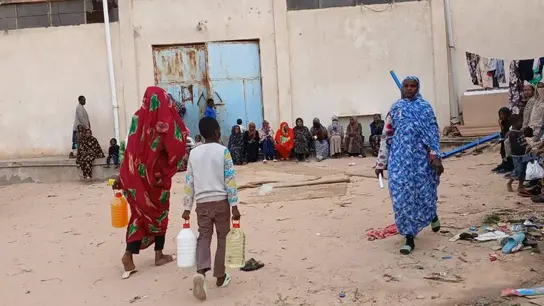
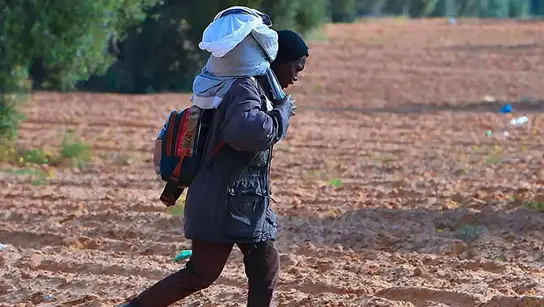
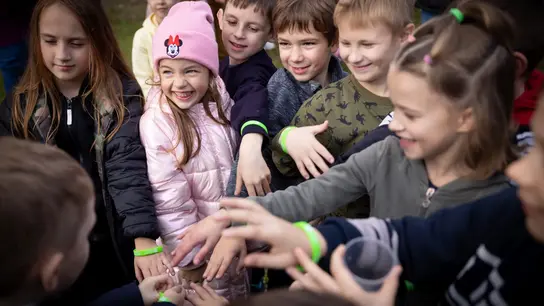
They are fleeing war, violence, political persecution, conscription, forced marriage, and hardship. They flee with their families or alone. Their journey is often dangerous. With your help, we can advocate for the rights of refugee children. At the same time, we provide emergency aid, support children with education, safe spaces, and psychosocial assistance.
Your donation helps!
Projects

Reports
Refugees - Facts & Figures
46.9 million children on the run
In 2023, the number of displaced people reached a new record high of 117.3 million. Particularly alarming is the high proportion of children and young people, who make up 40 percent of those seeking protection – that's approximately 46.9 million young people. The majority of them are internally displaced persons (IDPs) or flee to neighboring countries. 68.3 million are internally displaced persons seeking protection within their own countries. Only a small proportion flee to Europe. In 2023, most of those forced to flee their home countries came from Syria (over 6.5 million), Afghanistan (6.4 million), and Ukraine (6 million). These three countries alone account for 52 percent of the global refugee population.
Refugee children in Germany
In Germany, the number of new asylum applications rose significantly in 2023. A total of 352,000 asylum applications were submitted, the highest number since 2016. Approximately half of those seeking protection in Germany were children and young people, roughly 176,000 young people. Syria (104,561 applications), Afghanistan (53,282 applications), and Turkey (62,624 applications) were the main countries of origin. Most of the young people arrived with their families, but some also traveled alone. In 2023, 2,232 unaccompanied minors applied for asylum in Germany.
Definition and rights of refugee children
According to the Geneva Refugee Convention, a refugee is a person who "owing to well-founded fear of being persecuted for reasons of race, religion, nationality, membership of a particular social group or political opinion, is outside the country of his or her nationality and is unable to avail himself or her of the protection of that country." This definition therefore only applies if the person has crossed a national border. People who are displaced within their own country are referred to as internally displaced persons (IDPs).
The UN Convention on the Rights of the Child also addresses the rights of children on the run. Article 22 (1) states: "States Parties shall take appropriate measures to ensure that a child seeking refugee status receives appropriate protection and humanitarian assistance in the exercise of his or her rights."

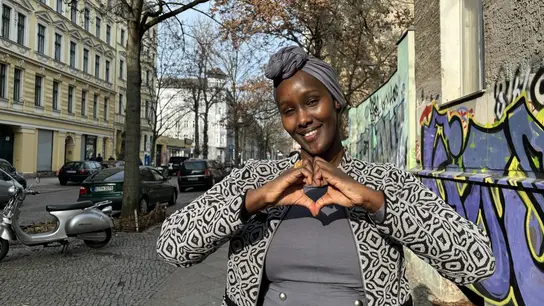
"Mental health and trauma processing are particularly important to me. As I have experienced time and again myself, art, music and sport can be a healing path to a healthy and strong self."
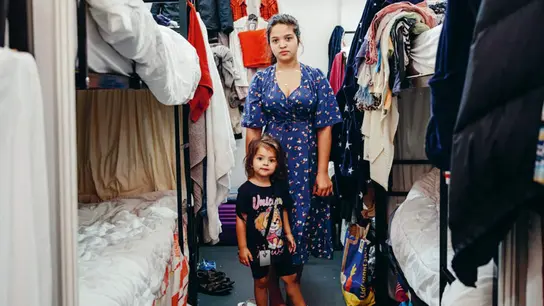

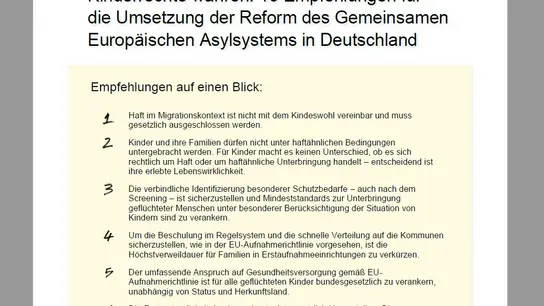
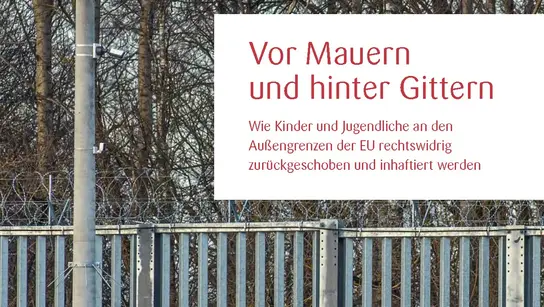
Further information on the topic of refugee children
Free information materials for ordering and downloading can be found in our material shop.
Browse for material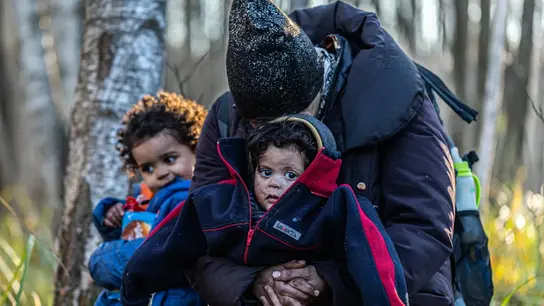

Your contact person
Annika Schlingheider
Speaker on Flight and Migration