Every year, millions of people worldwide are affected by natural disasters triggered by extreme natural events such as earthquakes, storms, or floods. However, the risk of a natural event developing into a disaster depends not only on its intensity. Crucial factors also include societal conditions and the ability to respond quickly in the event of a disaster. Societies with fragile infrastructure, high poverty, and inadequate access to healthcare are particularly vulnerable.
Preventing natural disasters
Extreme natural events cannot be prevented, but combating poverty, promoting education and health, and implementing preventative measures can reduce the risk of disasters. Earthquake-resistant construction, early warning systems, and investments in climate and environmental protection are important steps toward being better prepared for natural events.
World Risk Report and World Risk Index
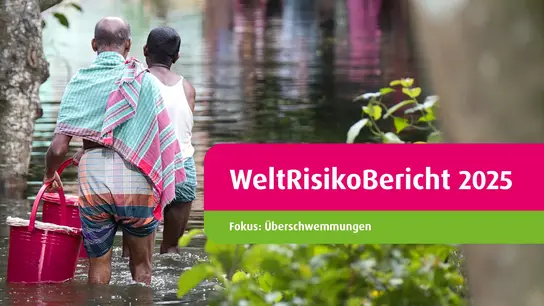
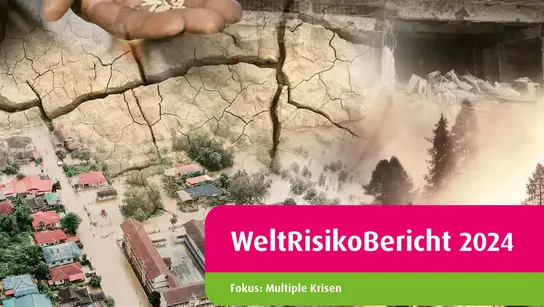
The World Risk Report, published since 2018 in cooperation with the Institute for International Law of Peace and Armed Conflict (IFHV) at Ruhr University Bochum, examines these connections. It includes the World Risk Index and focuses on a specific theme each year. The report aims to analyze global interrelationships between natural disasters, climate change, development, and preparedness, and to derive future-oriented measures for aid organizations, policymakers, and the media.