

150 NGOs demand more money for development cooperation
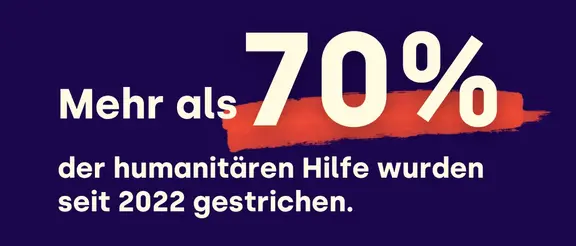
On April 29, the Federal Finance Minister will present the key figures for the 2027 budget. Massive cuts to the development cooperation budget are once again looming. Funding for humanitarian aid could also decline further – despite the numerous global crises, more than 70 percent of this funding has been slashed since 2022. Instead of cuts, the development organization ONE and VENRO, the umbrella organization of development policy and humanitarian organizations, are calling for increases, representing over 150 civil society organizations. Otherwise, the hard-won successes of development cooperation could be undone, and millions of people could lose their lives.
In light of the critical situation and great needs, VENRO and ONE are calling on the German government to increase funding for development cooperation and humanitarian aid in the 2027 budget. The Federal Ministry for Economic Cooperation and Development (BMZ) needs a budget of at least €11.2 billion next year. Funding for humanitarian aid must increase to at least €2.8 billion.
Michael Herbst, board member at VENRO, says: “With the 2030 Agenda, the global community set itself the goal of making the world ecologically, economically, and socially sustainable. Instead, in recent years we have witnessed an unprecedented departure from these goals in large parts of the industrialized world: In the USA and Europe, governments are cutting their funding for development cooperation and humanitarian aid – with dramatic consequences for millions of people. Germany, as a wealthy industrialized nation, must resist this temptation and invest more instead of making further cuts. Ultimately, we will all benefit from this.”
Lisa Ditlmann, Germany Director of ONE, says: “The world is burning, and Germany is cutting funding for the fire department. The sensible thing to do, however, would be to extinguish the fires or, better yet, prevent them from starting in the first place. The German government is cutting funding precisely where it has demonstrably achieved success: Child mortality has been more than halved, HIV-positive mothers are giving birth to healthy babies, and many children, especially girls, are attending school for the first time. These are all successes of development cooperation to which Germany has made a significant contribution. We should be proud of this. Why Berlin wants to cut funding in the very area where it has demonstrably and consistently delivered results is incomprehensible.”
Effects of the cuts – some examples:
According to a study published in the journal Lancet, up to 9.4 million additional people could die by 2030 due to the collapse in ODA funding.
Currently, 273 million children have no access to education . This number has been rising for the seventh year in a row.
An estimated 239 million people worldwide are in need of humanitarian aid. According to UN OCHA, only 10 percent of the necessary resources for providing aid in 2026 have been allocated so far.
Successes of development cooperation - some examples:
Since 2000, global child mortality has more than halved.
During the same period, maternal mortality fell by over a third.
Polio, also known as infantile paralysis, was almost eradicated.
HIV is no longer a death sentence; even in poorer countries, affordable medications are available.
Infectious diseases such as malaria or tuberculosis have been greatly reduced.
Hunger: In 2010, one in three children suffered from stunted growth due to malnutrition; today it is about one in five.
Many children, especially girls, are attending school, even in crisis areas.