Dialogue Works: Perspectives for working children
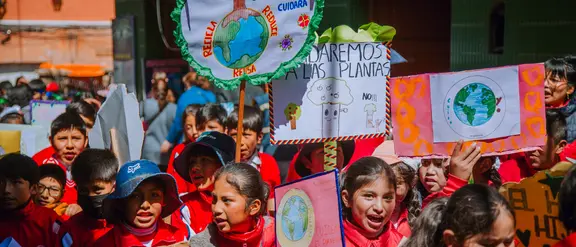
They are not silent. Not helpless. Not alone. In the "Dialogue Works" project, working children are taking the initiative themselves: for better working conditions, educational opportunities, and political change. Their demand: "We are working children – finally listen to us!"
The "Dialogue Works" campaign originated as an initiative of Terre des Hommes and Kindernothilfe, funded by the German Federal Ministry for Economic Cooperation and Development. For years, it has supported children's committees worldwide in making their experiences as working children visible at the political level. This year, the project was expanded and developed within the framework of the "Global Network on Child Participation.".
The project focuses on children who face unfair treatment, poverty, exploitation, or violence – and who often lack the opportunity to be heard. Their stories show that inclusion becomes a reality when children are taken seriously. They remind us: Every child has a right to protection, to education, to a childhood free from exploitation.


Interview with Looniva from Nepal:
"In a normal week I work about 42 hours."
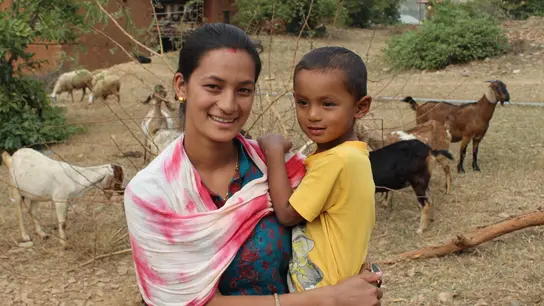
Looniva is 17 years old and comes from Nepal. She has been working since early childhood. She is a member of a Children's Advisory Committee (CAC) that represents working children and young people at the political level on behalf of the Global Network on Child Participation. In the interview, she talks about her experiences and demands:

Looniva, what does a typical day look like for you?
On a typical day, I get up and do my chores. Then I go to school. When I get back, I do more chores. I get up at five in the morning and then work for three to four hours in the morning and about three hours in the afternoon. When I'm finished with my chores, I do my schoolwork. I go to school from ten until two.
What job do you have? And what do you like about your job?
I'm a housemaid and I work for my relatives. I can do many things that are important to me, for example, going to school and studying, attending CAC sessions, and much more. These are the things I like about my job.
How many hours do you work in a normal week?
In a normal week I work about 42 hours, plus the additional work on Saturdays.
What do you think about working children? What do they need most?
Working children cannot be described in a single word. They may be children who have to work to earn a meal a day, or they may simply want to help their parents. Or they may work out of self-interest. They all need support from adults to exercise their fundamental rights.
What can politicians do to improve the living conditions of working children?
Politicians also advocate for working children. In Nepal, and in many other countries, there are actually good laws against child labor, and it seems they could eliminate child labor altogether. But they are not effectively enforced, which is very bad. Politicians should ensure that the laws are enforced and create employment opportunities for parents so that child labor can be significantly reduced.
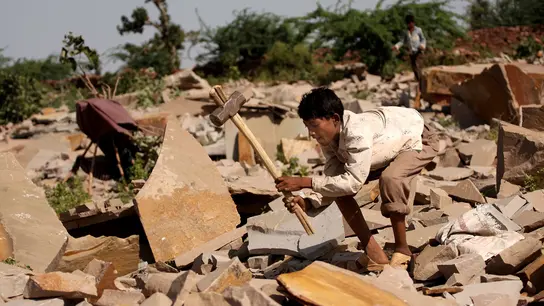
Nearly 138 million children worldwide are forced to work. Some pick tea, coffee, or cocoa beans; others weave carpets and sew clothes, quarry stones, or mine for metals and other raw materials.
How many children can escape poverty and exploitation also depends on what ends up in our shopping carts and (online) baskets. Our free brochure, "Consuming Without Child Labor," encourages consumers to look for products that were not harvested, manufactured, or transported by children. It also provides an overview of Fair Trade suppliers, labels, and product alternatives.