

The Willkamayu River is recognized as a legal entity
On February 26, 2026, the Canchis Provincial Council unanimously passed a municipal ordinance recognizing the Willkamayu River as a legal entity (a legally recognized entity with rights and obligations, capable of being represented in administrative and judicial proceedings). The river is thus no longer viewed merely as a resource, but as a bearer of its own rights. This decision is a legal milestone for the Cusco region and a clear signal for the protection of waterways.
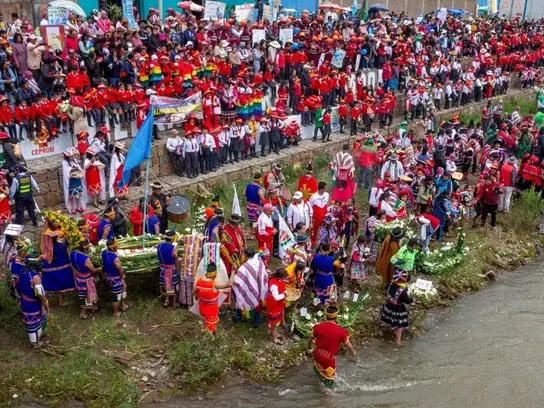
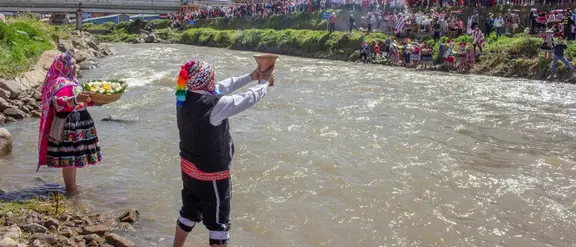
The path to this decision began about a decade ago on the riverbank. Regular ritual ceremonies for World Water Day, clean-up days, and ongoing environmental education gave rise to a local movement. This movement was supported, among others, by Terre des Hommes partner organization CEPROSI and forged a link between Andean ritual, modern environmental education, and political advocacy. Children and young people became guardians and voices of the river – an approach that was promoted and systematically embedded in Ceprosi's project work.
The provincial council's decision is also the result of careful professional preparation. A presentation to the council, led by a former project participant, translated ten years of educational and community work into a concrete proposal for public policy. In this way, culturally ingrained practices were transformed into a legal instrument intended to ensure the long-term protection of the Willkamayu River.
Recognition as a legal entity now creates a binding framework. This framework must be fleshed out with implementation steps: responsibilities and procedures, protection and restoration measures, monitoring, and ongoing environmental education. The partners involved will continue their work to ensure that the new legal situation leads to tangible improvements for the river and the communities along its banks.
The Canchis region demonstrates how local knowledge and modern legal developments can work together. The Willkamayu thus serves as an example of a policy that considers the lives of future generations and recognizes cultural roots as a strength.