

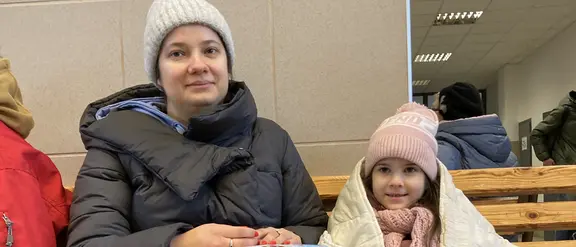
Hungary: Integration of refugees
Refugees reaching Hungary via the Balkan route often experience horrific violence; pushbacks, including those against families and minors, are commonplace. When these young people arrive in Hungary, they are unaware of their rights and are not welcomed with open arms.
In May 2020, the government introduced new asylum regulations that made it virtually impossible to apply for asylum in Hungary. Under these rules, asylum seekers—with few exceptions—are not permitted to submit an asylum application on Hungarian territory or at the border. They are only allowed to submit a "declaration of intent" to the Hungarian embassies in Belgrade and Kyiv. Based on these declarations, the asylum authorities can decide whether or not to grant asylum seekers a one-time entry permit to apply in Hungary. As a result, the number of asylum seekers has dropped drastically.
In recent years, the Hungarian government has actively fueled racism and intimidated those who advocate for an inclusive society. For example, it seeks to legally prevent non-governmental organizations from helping refugees or even reporting on the human rights situation. Many young Hungarians harbor prejudices against refugees, which they pick up from the media and political discourse, and have no direct contact with young people who have experienced displacement. Local governments are also often overwhelmed and unsure how to respond effectively.
The Hungarian Helsinki Committee (HHC) is the only legally oriented NGO in Hungary that assists refugees and the only provider of legal information in this field. In its empowerment courses, the HHC employs a critical pedagogy that centers on recognizing the individual expertise of the participants. It acknowledges that they have already accumulated a wealth of experience in rebuilding their lives in a new country.
The HHC empowers Ukrainian and non-Ukrainian refugee youth to advocate for their rights and against discrimination. To this end, it has established a six-member youth council (including refugees, migrants, and Hungarian youth) where young people develop their skills in mentoring, communication, and facilitation. They support HHC staff in all activities and act as mentors and ambassadors for their peers.
Refugee participants can integrate into Hungarian society through empowerment courses, while Hungarian youth are sensitized to human rights through awareness camps and workshops in schools. These courses and camps allow participants and their mentors to get to know each other and jointly implement social measures that bring about sustainable and lasting change. By giving peer mentors and their mentees the opportunity to develop their own initiatives together, HHC equips them with tools that can become real alternatives to the growing weariness and disillusionment of Hungarian youth. To reach a broad spectrum of people, HHC is also developing a strong online presence as part of its awareness-raising efforts, targeting Hungarian youth with specific campaigns and messages. HHC also trains community officials, mayors, and teachers who directly influence and shape the lives of both refugees and Hungarian youth.
Please help with a donation