

Philippines
A theatre project offers protection, help and justice for children
Under former President Rodrigo Duterte, people in the Philippines experienced a period of organized state terror: In the name of a "war on drugs", police and so-called death squads stormed houses in the slums, shooting people without charge or trial.
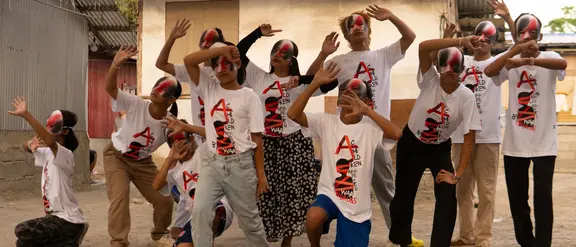
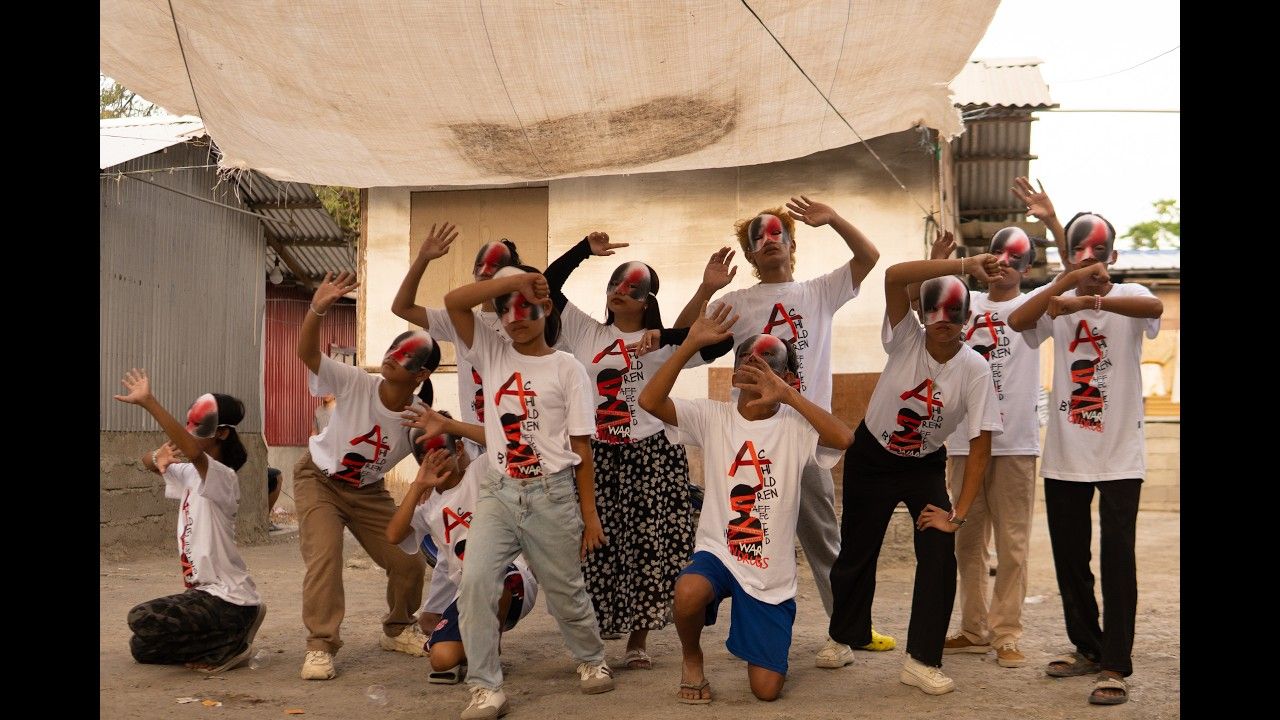
"I heard two shots," the boy shouts on stage. "With the third shot, the glass fell from my mother's hand to the floor."
The young people wrote their play themselves: three acts reflecting the fear, trauma and madness of the so-called "war on drugs" – from the memories of children who were traumatized and left without help, some of whose parents were shot dead before their eyes.
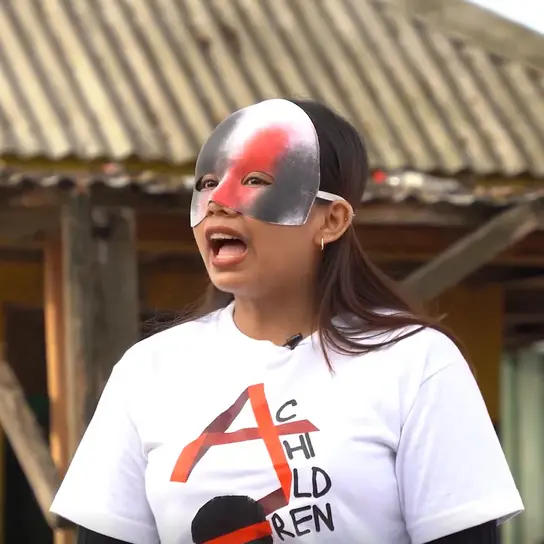
"I want people to know what we've been through. I feel safe here because we realize we're not alone."
The war against the poor
Rodrigo Duterte, president of the Philippines from 2016 to 2022, portrayed himself as a strongman against drug trafficking – and
ordered a veritable witch hunt that claimed the lives of thousands of innocent people: There were quotas for people to be killed and arrested. And there were death lists.
To land on a death list, the mere accusation that the target person used drugs was enough. As a result, people in the poorer
neighborhoods of major cities were particularly targeted: they were the easiest targets. Abuse of power and denunciations were commonplace. Up to 30,000 civilians were executed, including at least 150 children. Tens of thousands of children and young people lost parents and siblings.
Justice for the bereaved
Today, Rodrigo Duterte no longer resides in the presidential palace, but in the prison of the International Criminal Court in The Hague – accused of crimes against humanity. The "war on drugs" is officially discontinued. Yet extrajudicial killings still occur in the poorer neighborhoods. The consequences for children, the trauma, and the downward spiral of poverty continue to this day.
And yet, something has changed: children and young people can now stand up and take action; they can demand justice and political change so that they and others no longer have to suffer. "We are the children affected by the 'campaign against illegal drugs,'" Chin and the other children call out to the audience at the end of the performance. "And we are no longer afraid."
The language of terror
Tokhang means "to knock and appeal." It refers to the armed incursion into the homes and huts of suspects. "Tokhang" became synonymous with the constant threat of extrajudicial killings.
Nanlaban means "someone resisted" and became a standard phrase in virtually every police report to justify executions.
Palit-ulo literally means "swapping heads." In this practice, relatives of the suspects are arrested or killed if they cannot be found.
Swap-lat refers to the practice of forcing police officers or emergency workers to perform sexual acts in order to be released from custody or removed from a death list. For example, daughters whose parents were on death lists were blackmailed in this way.
Help for children who were left behind
For tens of thousands of children whose mothers and fathers have been arrested or executed, a vicious cycle of poverty and hopelessness looms. State support is virtually nonexistent: without parents, they must provide for themselves and their siblings. Especially in the slums, many cannot even read or write. Hardly anyone has completed schooling or vocational training – some don't even have a birth certificate.
The consequence: young people are forced into precarious work and are at the mercy of their employers. Many are at risk of turning to crime, drugs, or prostitution to survive.
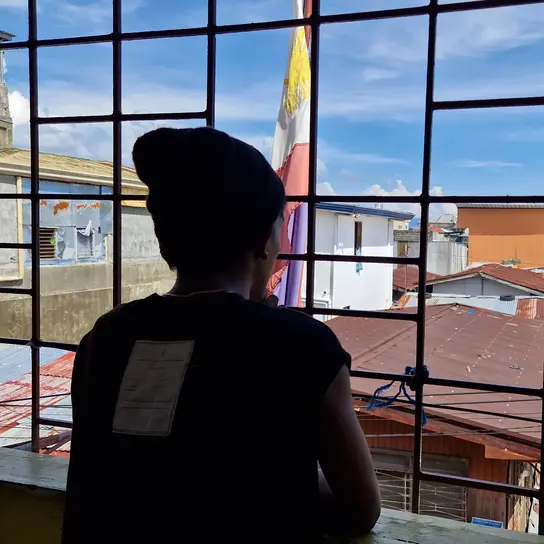
"I've been working as a parking lot attendant since my father was shot and my mother was imprisoned. I earn about 200-300 pesos (approximately 3-4 euros) a day. That's enough for my siblings and me to pay for our food."
How we help:
Justice for victims and their families
Our partner organizations in the Philippines have been working to end the violence ever since children first fell victim to the "war" in Davao City. They meticulously document every single child death: a total of 150 cases have been recorded since then. These records now serve as evidence against the perpetrators, including at the International Criminal Court.
Protection and opportunities for surviving children
In Manila and Davao City, partner organizations provide direct assistance to children who have lost parents or siblings:
- Emergency aid, especially with food, medicine and clothing
- Social work to find ways out of poverty
- Trauma support and psychosocial assistance
- Assistance with education and training
(help with applying for a birth certificate; procurement of school supplies; referral to bridging schools to make later attendance at a regular school possible) - Raising awareness about human rights and children's rights
- Legal aid and legal protection for children who have been wronged.
Let's not leave them alone: Help children with your donation!
- For €30 children receive a school package (uniform, bag, materials)
- 60 € provide a family of five with nutritious meals for one week
- 150 € enable a communal reading corner in a community center