

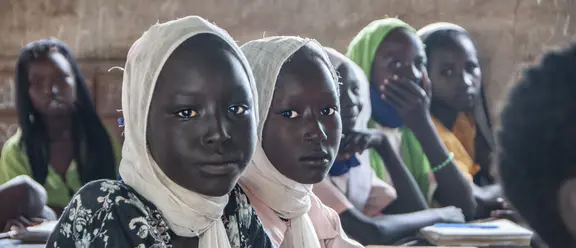
South Sudan: Terre des Hommes ' humanitarian aid
Since April 2023, a power struggle has been raging in Sudan between the armed forces under General Abdel Fattah Abdelrahman Burhan and the paramilitary group Rapid Support Forces (RSF). The conflict has already claimed tens of thousands of lives, and millions are displaced. Hundreds also stream into neighboring South Sudan every day in search of safety. Many of them fled to Sudan just a few years ago to escape the armed conflict in South Sudan and are now returning – once again fleeing violence. South Sudan has now taken in over half a million refugees. Chris Hartmann (48) is responsible for humanitarian aid at Terre des Hommes . In this interview, he talks about the current situation and how Terre des Hommes is supporting refugees in South Sudan.
Chris, how are the people fleeing from Sudan to South Sudan doing?
Many suffer from malnutrition, especially children. While the World Food Programme (WFP) distributes food and cash assistance, it is insufficient. Refugees often lack access to agricultural land to improve their situation themselves. Many are desperate – partner organizations report an increase in suicide attempts in reception centers due to the precarious conditions. This is a disturbing sign of the lack of hope in the face of insecurity and protracted crises. Refugees urgently need better humanitarian aid, shelter, and protection. But opportunities must also be created, especially for young people.
Where do most refugees arrive?
The town of Renk in the northeast of the country is a first point of contact for many. Here, the UN Refugee Agency (UNHCR), in cooperation with the South Sudanese government, has established two reception centers. However, they are overcrowded. Floods in Renk and Maban are further exacerbating the situation and posing additional dangers and challenges for the people.
How are the children doing while they are fleeing?
Children, adolescents, and women suffer most under these difficult living conditions. Violence against these groups is increasingly documented in reception centers. Cases of child labor are also rising due to the precarious supply situation, as are cases of domestic violence. Furthermore, the flight, the loss of family members, property, and assets, and the harsh living conditions in the host areas have lasting psychological consequences.
What do the new arrivals, and especially the children among them, need most urgently?
Food, psychosocial support, and education: To date, around 255,000 children and young people have fled to South Sudan with their families. The already weak education system cannot meet the additional needs of these children and young people. Educational opportunities are also scarcely available in the reception centers.
What are the biggest obstacles to bringing aid supplies to South Sudan?
These are primarily the heavy rains and floods in the north of the country. This has disrupted logistics and transport. The difficult economic situation and high inflation are also having an impact: in 2024 alone, the inflation rate in South Sudan reached 63 percent. Market prices have risen, but wages remain low or are not paid at all. The costs of delivering aid to hard-to-reach areas are increasing. Bureaucratic hurdles further complicate humanitarian aid, as do newly introduced taxes and levies, which are driving up operating costs even more.
How important is the role of local partners in providing emergency aid in South Sudan?
The current situation requires the involvement of all relevant humanitarian actors. This includes the UN as well as international and local non-governmental organizations. The latter play a particularly important role, as they understand the conditions and needs on the ground and can address them appropriately. Good coordination and a division of labor are essential for this. Local partners must be supported. They remain on the ground and can transition humanitarian aid into longer-term development cooperation. Sustainable and lasting partnerships are crucial and offer the opportunity to establish a minimum level of continuity. This fosters commitment and trust.
What strategies does Terre des Hommes pursue to improve the living conditions of refugees and the local population?
Our partner organization, the Jesuit Refugee Service (JRS), focuses on providing immediate aid, but also on promoting sustainable solutions and measures. The aim is to empower people to cope with crisis situations. These measures combine humanitarian, peacebuilding, and development activities. Refugees, returnees, and members of host communities are all equally involved and supported.
In the north of the country, aid efforts focus on providing psychosocial support to refugees and returnees—South Sudanese who once fled violence in South Sudan and are now returning, again fleeing violence. We help them cope with the stress and improve their mental health. These activities are combined with peacebuilding measures. We aim to promote positive social interactions and peaceful coexistence between refugees, returnees, and host communities, and to prevent conflict. Increased integration and strengthened social relationships and networks also have a positive impact on mental health. Additionally, educational programs are implemented in reception centers and communities to enable displaced children to return to school and reduce the number of school dropouts.
In the southern provinces, too, efforts focus on empowering refugees and their host communities through education, support, and reconciliation programs. Due to the relative safety in these regions, these programs can be designed for the long term and expanded to include income-generating measures. We also support school committees and teacher training to improve the quality of education in the communities. In the area of peacebuilding, community members are trained to identify and resolve conflicts within their communities.
Future measures will focus more on vocational training for young people and on market-oriented activities. We want to promote the economic independence of refugees. Education and training give them better employment opportunities – both in South Sudan and upon a possible return to their home country.
Is there a topic that you think has received too little attention so far?
The situation of people with disabilities is clearly appalling: they are severely affected by the consequences of conflicts, yet rarely receive the necessary support. Despite their increased needs, hardly any resources are provided to meet their specific humanitarian requirements. This particularly vulnerable group must be given greater consideration in humanitarian aid, not only currently in South Sudan and Sudan, but generally in the context of crises and conflicts.
Please help with a donation