


Terre des Hommes Day of Action 2026
Coffee, bananas, chocolate, cell phones, or flowers – many products in our supermarkets come entirely or partially from distant countries. Often, the people who produce these goods receive only two or three euros a day. In countries like India, Bangladesh, or Mozambique, this is rarely enough to feed a family. Children therefore often have to contribute to the family income from a young age.
The international community had even committed itself, through the UN Sustainable Development Goals, to ending child labor worldwide by 2025. This deadline has now passed, and child labor has not yet been eradicated: 138 million children worldwide still have to work. 54 million of these children are forced to perform particularly dangerous and exploitative work.

On World Children's Day, September 20th, we will take to the streets to raise awareness about exploitative child labor.
Terre des Hommes helps children escape exploitation, attend school, and receive vocational training. Together with children and our partner organizations, we fight to end exploitative child labor: governments must invest in quality education for children from poor families, increase legal minimum wages for adults, and regulate employers in high-risk sectors.
Do you want to organize an event?

Exploitation? Child labor?
Why we need not only bans, but also strategies against (child) poverty
No child should have to work. But for many affected children and young people, this is a distant dream. They even resist blanket bans on child labor: Because their families lack other income opportunities, they fear that bans will push them into informal or even illegal work – where they can be exploited even more easily.
The fight against child labor must therefore always focus on what is best for the child in concrete terms. Exploitative and dangerous forms of child labor must be prohibited without exception. However, the only effective solution for many other forms is to combat the root causes of poverty: fair wages for parents and good educational and training opportunities for children.
Our demands
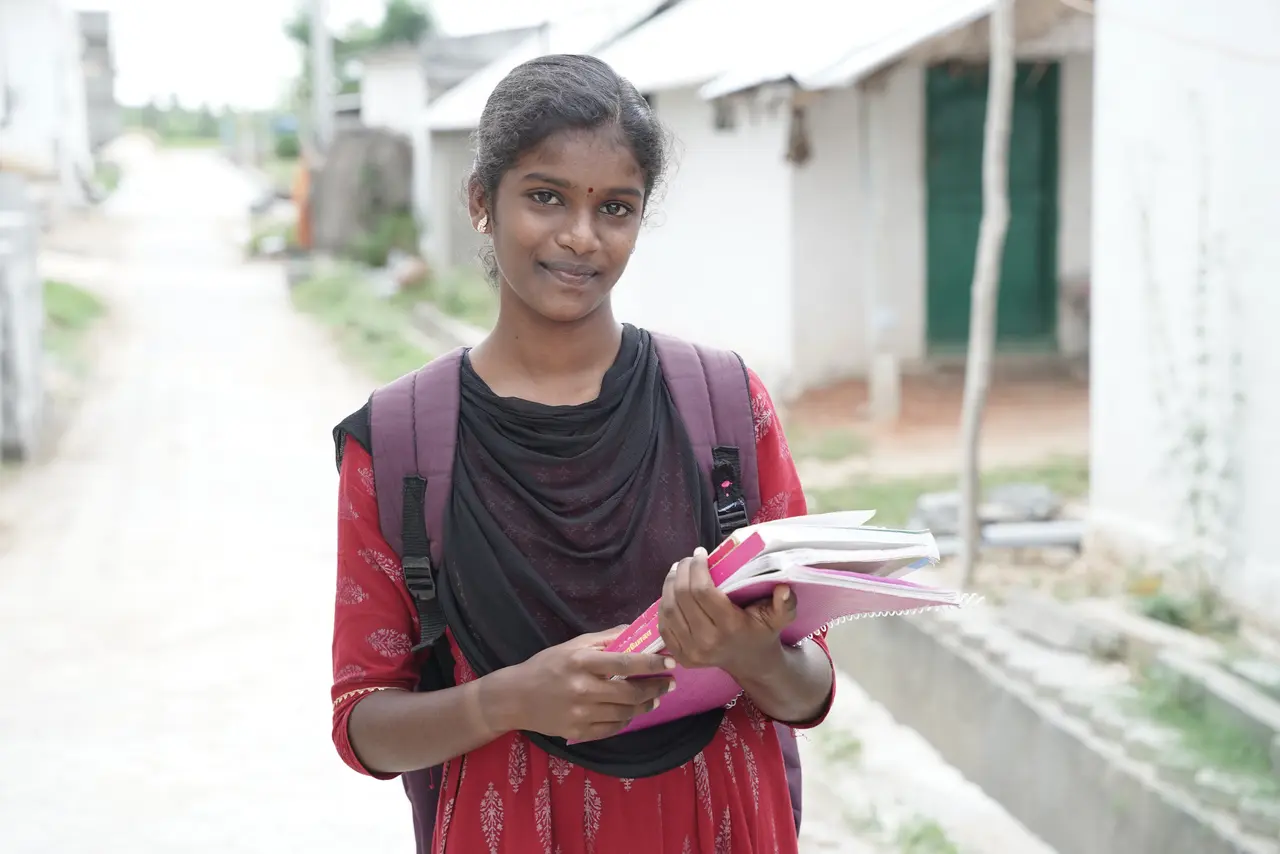
Child labor, which prevents school attendance, undermines the right to education and perpetuates poverty across generations. Children who regularly drop out of school or are never enrolled in school lose their most important opportunities for secure and well-paid work later in life. Education is the most powerful lever for long-term poverty reduction: school qualifications increase employability, reduce vulnerability to exploitation, and strengthen social participation.

In quarries, they inhale dust that causes lasting damage to their respiratory systems. On plantations, they handle dangerous tools or are exposed to toxic pesticides. They face death in narrow mine shafts. According to the ILO, approximately 22,000 children and young people die in workplace accidents every year.
Child labor that is dangerous or harmful to health must always be prohibited and prevented under all circumstances.

Exploitation violates the dignity and rights of children. Even if some children work, they must not be exploited. Protective mechanisms must provide those affected with immediate access to complaint procedures, legal support, and educational opportunities. Terre des Hommes partner projects therefore ensure on the ground that labor and trade inspectors take action and guarantee that no children are exploited.
The German Federal Government also has a responsibility. Therefore, Terre des Hommes , together with 125 other organizations, is advocating for a supply chain law and is also campaigning for an effective European directive that takes all stages of production into account.

Trade unions are essential for enforcing fair working conditions and ending exploitation. This applies to children just as much as to adults! Children's unions exist, for example, in Peru, Bolivia, and many countries in West and Central Africa. Elsewhere, however, working children are too often denied the right to assembly and union organization: paradoxically, because they are not yet of age, or because child labor is prohibited in the country – and therefore, for the authorities, simply does not exist.
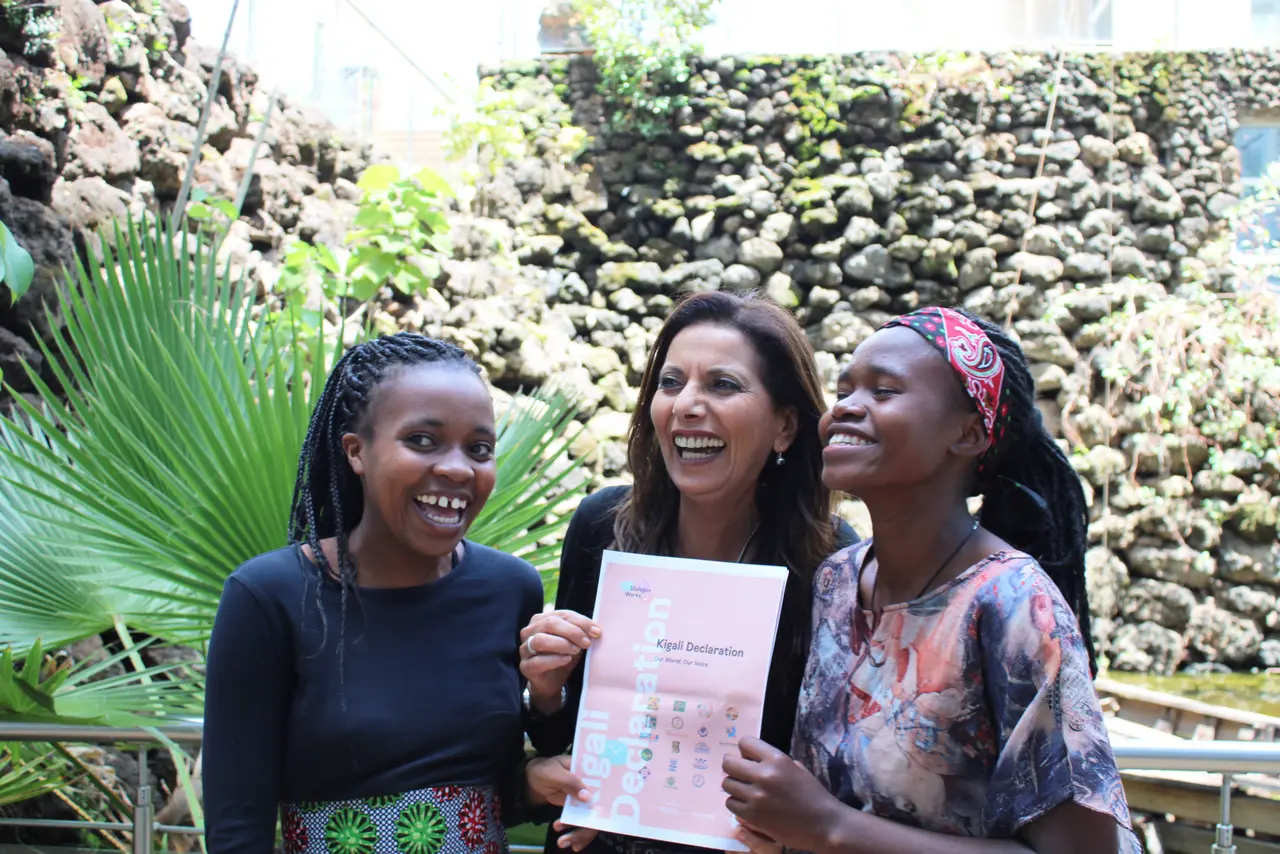
Poverty is a major driver of child labor. As long as families cannot adequately provide for basic needs, healthcare, and education, there is intense pressure to integrate children into the workforce. Therefore Terre des Hommes advocates for living wages and social security: workers must earn enough so that no child in the family has to contribute to the family income and all children can attend school. Social security for parents of children, such as health and unemployment insurance, is also crucial.

Poverty is one of the main causes of child labor: when families don't have enough to live on, the pressure increases for children to contribute to the family income. Sustainable child protection therefore starts with addressing the economic foundations of families.
Without effective poverty reduction, short-term measures remain fragile. Only a combination of social protection, living wages, and targeted educational incentives can permanently prevent children from having to rely on work instead of school.

"Against exploitative child labor, for living wages and social security for families in the Global South! Children's unions must finally be recognized as such and the right to education must be enforced worldwide."
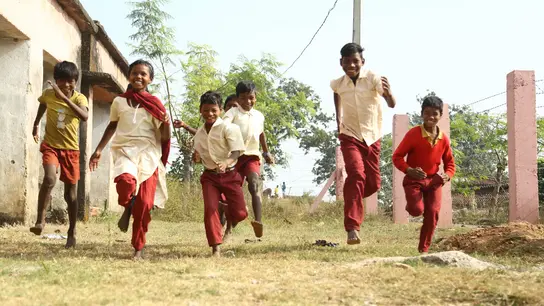
What working children think and want
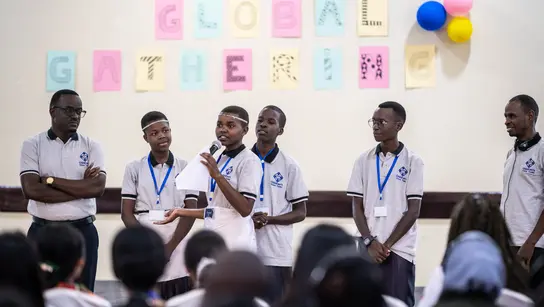
Child labor is a topic of much discussion – but almost exclusively adults dominate the conversation. The working children themselves are usually not asked for their opinions. Terre des Hommes takes a different approach and listens to them. For example, in the project "Dialogue Works," working children from all over the world demand their rights.
Child labor: Frequently asked questions
The United Nations Convention on the Rights of the Child states in Article 32: Every child has the right to be protected from economic exploitation. The International Labour Organization (ILO) defines precisely what this means:
Exploitative child labor according to ILO Convention 182 from 1999:
- Slavery and debt bondage and all forms of forced labor
- Work by children under 13 years of age
- Child prostitution and pornography
- Use of children as soldiers
- Illegal activities, such as drug smuggling
- Work that endangers health, safety or morals, such as work in quarries, carrying heavy loads, or very long working hours and night work.
Work that endangers the health, safety or morals of a child is defined in Article 3 of ILO Recommendation 190
- Work that exposes children to physical, emotional, or sexual abuse
- Working underground, underwater, at dangerous heights or in confined spaces
- Working with dangerous machinery, equipment or tools, as well as carrying heavy loads
- Working in an unhealthy environment that exposes children to dangerous substances, excessively high temperatures, noise or vibrations
- Work under difficult conditions, such as long working hours, night work or isolated work where the child is exposed to the employer.
Further information:
ILO Conventions on Child Labour (IPEC)
The International Labour Organization (ILO) and UNICEF presented a report on the situation of child labourers for the World Day Against Child Labour in June 2025. According to the ILO, 138 million children aged five to 17 are working worldwide.
Among them are 54 million girls and boys in dangerous work:
- They toil in dangerous places like quarries or commercial plantations, they work nights or have excessively long working hours.
- 10.3 million children between the ages of five and eleven work under dangerous conditions.
- They perform forced labor, for example in households or in agriculture. They are sold and trafficked. They are sexually exploited, for example for prostitution or the production of pornography. The International Labour Organization also classifies child marriage as slavery and therefore as exploitative child labor.
Worldwide, 8 percent of all children work – on average, about one in thirteen. In the world's poorest countries, almost one in four children works, and in war zones and crisis areas, the figure is over 20 percent. This is one of the reasons why so many children in sub-Saharan Africa are forced to work: the African continent has the most fragile states and conflicts, and a total of 86.6 million children work there. North Africa and the Middle East follow at a considerable distance with 12.2 million child laborers, about 8.3 percent of all children. In Latin America and the Caribbean, the figure is 5.5 percent (7.3 million children), in Central and South Asia 3.4 percent (17 million children), and in East and Southeast Asia 3.1 percent (12.3 million children).
Does child labor exist in Germany?
Minors also work in Germany, although the minimum age is 15. Even 13-year-olds are allowed to do light work for a few hours a week, such as delivering newspapers or babysitting (JArbSchG - Law for the Protection of Working Youth).
Nevertheless, there are still cases of child labor in Germany that clearly violate legal standards. This was one of the conclusions reached by the Terre des HommesChild Labor Report 2024, "Child Labor? In Germany?"
Child labor is involved in many products: cars, cosmetics, cell phones and computers, fashion and home textiles, coffee, chocolate, tea and juices, hazelnuts and chilies. Children often work at the beginning of the supply chain in the extraction or cultivation of raw materials: they mine mica, which is used in cars, cosmetics, and electronics. They harvest cotton for the fashion industry. They pick cocoa, coffee, or oranges for food companies. Around ten percent of child laborers work on such goods, which are exported to global markets.
Many of these children are not employed, but work alongside their parents or independently: they sell what they have mined that day to middlemen, for example. Or they go with their parents to plantations at harvest time.
Even children who don't toil for the global markets mostly work within their families or independently in the so-called informal sector: they herd livestock in the pastures, work in the fields, look after younger siblings, fetch water, or sell snacks and other small items on the street. Sixty-one percent of children work in agriculture, followed by services (27 percent), [missing information] (31.4 million), and industry (13 percent).
Exploitative child labor damages children's physical and mental health and deprives them of access to education. It is also harmful to society as a whole, as it causes poverty. Non-exploitative work can also have positive consequences.
Negative consequences of exploitative child labor:
- Children are ruining their health at work: In quarries, they inhale dust that causes lasting damage to their respiratory systems. On plantations, they are exposed to harmful pesticides that trigger headaches and stomach aches and can cause cancer in the long term. Children who carry excessively heavy loads or perform monotonous movements all day suffer postural problems. Children who do heavy labor are chronically tired and have difficulty concentrating.
- Many children even lose their lives: According to the ILO, around 22,000 children and young people die in workplace accidents every year.
- The mental health of children is endangered by hard labor and endless drudgery. In addition, many suffer violence: they are yelled at, hit and kicked, deprived of food, or locked up. Children are repeatedly sexually harassed and raped at work. Children who are completely subject to the will of others find it difficult to develop healthy self-esteem. Girls and boys suffer from anxiety and feelings of inferiority, lack confidence, or become withdrawn. Some children commit suicide.
- 31 percent of working children aged five to 14 do not attend school. Those who receive no education have little chance of finding better-paying work and will have to eke out a living as day laborers and unskilled workers. Exploitative child labor thus keeps girls, boys, and their families trapped in poverty.
- The exploitation of children damages a country's economy and hinders development: child laborers with no or poor school qualifications become unskilled workers. However, to increase productivity and collect more taxes, economies need well-trained workers.
The illegal economy is where individuals and groups become wealthy: child prostitution and child pornography generate billions in revenue every year. Children in the Congo mine for coltan; the industry is controlled by warlords who prevent any regulation of the mining operations. The international IT industry profits because coltan is needed to manufacture laptops and mobile phones.
Positive consequences of non-exploitative child labor:
No child should have to work. But especially in poorer, economically disadvantaged regions, a blanket ban isn't always the answer: not all child labor is the worst kind, and not all children work in dangerous places. If children aged twelve and older work a few hours a day in their parents' business or do light work, such as delivering newspapers, helping neighbors, or selling food or small items on the street, this can be an important step towards a self-determined life. Their earnings allow them to go to school and buy notebooks, pens, books, or food. For working children, it's often a matter of managing their time very carefully so they don't neglect their schoolwork while still earning enough money.
For these children, the priority is to combat exploitative forms of child labor as well as structural poverty. They need opportunities: Terre des Hommes supports working children in these cases, for example, by helping them to complete their schooling and organize themselves so that they can stand up for their interests and not fall into exploitative work.
Material poverty is a cause of exploitative child labor: when adults earn too little income and lack social security, the risk of children having to work increases. Other causes include discrimination, lack of legal rights, and inadequate education systems. As a result of displacement and flight, war and armed conflict, and the destruction of livelihoods through environmental degradation and climate change, entire regions are impoverished – child labor is one consequence.
- Poor education systems: 263 million children worldwide do not attend school – because there is no school nearby or their family cannot afford it. Many more children learn very little at school because they are crammed into overcrowded classrooms and taught by poorly trained teachers. Corporal punishment is still commonplace in many countries. School fees or the costs of notebooks, books, or internet access exclude children from poor families. Girls and children belonging to minority groups are bullied and ostracized.
- Starvation wages, lack of social security, and no union representation: Adults are unemployed or earn only starvation wages. At the same time, there is no social safety net, such as unemployment benefits, social assistance, or sick pay and short-time work allowances: Families are then dependent on the labor of their children. During the worldwide lockdowns of the COVID-19 pandemic, day laborers and workers around the globe lost their income overnight. Millions of schoolchildren everywhere had to work to compensate for their parents' lost earnings. Whether they will be able to return to school is unclear, as many have fallen behind or have to work off family debts. In some sectors, there is a genuine demand for child labor: Employers hire children in both the informal and formal sectors because they can then pay even lower wages, and children cannot organize into unions. Many families cannot expect help from government agencies. In many countries, authorities and police are weak or corrupt and themselves profit from exploitative labor.
- Discrimination: In many societies, certain groups are discriminated against and deprived of fundamental rights. Children rarely have a voice and are often overlooked. Women and girls are considered inferior. As a result, girls' schooling is not valued; from a young age, they are seen as a workforce without rights or a voice. Children from poor families, refugee children, migrant children, indigenous children, and children of other skin colors, ethnicities, or religions also experience such discrimination.
- War and armed conflicts destroy a country and force people to flee. Worldwide, half of all refugees are children. They often work to supplement the family income and because they cannot attend school.
- In many parts of the world, climate change to extreme weather events: harvests are failing and small farmers can no longer make a living from their produce. Often, children work on the farm, or the whole family moves to the nearest city to work.
Terre des Hommes helps children escape exploitative working conditions and receive schooling and vocational training. To sustainably end exploitative child labor and prevent children from falling into such working conditions, changes are needed on many levels: in families, schools, and neighborhoods, as well as in businesses and government agencies. Terre des Hommes therefore involves everyone who can improve the situation of children – both locally and internationally: mothers, fathers, and siblings; neighbors; teachers and school administrators; employers; businesses; and consumers. We can all contribute to ensuring that children go to school instead of toiling.
Above all, the children themselves are important. They have the right to be consulted and to participate in decision-making. Terre des Hommes involves both girls and boys and supports them in representing their interests. For example, in Tamil Nadu, South India, groups of girls are working together to ensure that they can attend school and are not forced to work in cotton mills or be married off at a young age. To enable them to advocate for their needs and draw the attention of politicians and government officials to these problems, Terre des Hommes through its supports child laborers in 15 countries "Dialogue Works" project
Together with children and our partner organizations Terre des Hommes demands:
- Better education systems: All children have the right to education. Worldwide, 263 million girls and boys are unable to attend school. Governments and the international community must invest more and more effectively in education. The goal should be to enable children from poor families and discriminated groups to attend school. More schools and more well-trained teachers are needed. Curricula must be aligned with the realities of students' lives, and teaching methods must be child-friendly. Corporal punishment must be abolished. Free school meals and good school libraries are particularly important. Schools in regions where many children work must address this issue with children and parents and, for example, follow up on students who drop out. Schools that reopen after the lockdowns during the COVID-19 pandemic should actively work to bring their students back.
- Living wages and social security for adults: Terre des Hommes is involved in the Textile Alliance, for example, to ensure that employers pay living wages: workers must earn enough so that no child in the family has to contribute to the family income and all can attend school. Social security for adult workers, such as health and unemployment insurance, is also crucial.
- Fair Trade: Local employers and international companies must not employ children or tolerate their use in their supply chains. Terre des Hommespartner projects therefore ensure that labor and trade inspectors take action locally and guarantee that no children are exploited. To encourage responsible business practices among manufacturers and retailers, children's and human rights organizations developed Fair Trade and social labels back in the 1990s: Today, Fair Trade food and sustainable fashion are widely available. We urge you: Choose Fair Trade products or those with a reputable label. Encourage your club, school kiosk, or workplace cafeteria to switch to products made without child labor. Inquire in your city about fair procurement policies to ensure, for example, that pedestrian zones are not paved with stones mined by children. We will present products that may involve child labor and recommend reputable alternatives.
However, the responsibility should not be placed solely on consumers: Terre des Hommes together with the Supply Chain Act initiative, therefore demands that the German Federal Government and the European Union oblige companies to respect children's and human rights in their supply chains
Exploitative child labor is found in food, cosmetics, cars, household appliances, fashion, and home textiles. Terre des Hommes urges you: Choose Fair Trade products or those with a reputable social label wherever possible. On our page "Consuming without child labor – tips for consumers," we provide an overview of available Fair Trade products and the labels that represent specific product categories.
Take action now!
Spread our message & demands
on WhatsApp and social media
Terre des Hommes working against exploitative child labor
Worldwide, Terre des Hommes works together with children and young people to fight for their rights: for education and training, against poverty and exploitation.


Would you like to get involved? Feel free to contact us:

Ana Jacinto
Speaker: Active Engagement

Heike Knöpke
Administrative support for engagement