

Welcome! On this page you will find tried-and-tested teaching materials for all subjects and grade levels: ready-to-use worksheets and lesson plans. Our materials are curriculum-aligned, inclusive, and designed to save time – for motivating lessons and sustainable learning. Save preparation time and inspire your class.
Primary school and lower secondary school
This teaching resource, using a twenty-minute film based on the example of two children in Peru, enables the topics of children's lives in another culture, poverty and child labor, the right to education, and ways out of poverty to be addressed clearly and in an age-appropriate manner in social studies lessons for grades 3 and 4. The four lesson units are based on the following pedagogical principles:
- Children's rights: All materials are based on the UN Convention on the Rights of the Child , in particular the right to education (Article 28).
- Action competence: Children develop their own ideas on how they can show solidarity.
- Creativity & Empathy: Through storyboards, drawings and reflection tasks, learners are actively involved in the learning process.
The four units are flexibly designed: they can be integrated into your lessons as a continuous series or as individual units. They are available as a Word file for self-editing and as a PDF document.
Violence exists in many places: at school, in the schoolyard, on the bus, or at home. The violence prevention program "Together Without Violence" is aimed at children aged six to twelve in schools and social institutions. The program teaches children, teenagers, and adults how to resolve conflicts peacefully. The curriculum aims to reduce aggressive behavior in children. The children are trained in social skills. They learn to recognize and express their feelings, and to understand their own boundaries and those of others. Resolving conflicts peacefully without resorting to violence is the learning objective of this program.
It was a milestone for children's rights, environmental protection, and climate action: In the summer of 2023, the UN Committee on the Rights of the Child adopted General Comment No. 26. With this, it officially established that every child has the right to grow up in a clean, healthy, and sustainable environment. The Comment explicitly addresses the looming climate catastrophe, species extinction, and ongoing environmental pollution. Against this backdrop, the document outlines necessary countermeasures to protect children's lives and future prospects. We have adapted it using child-friendly language.
Children's rights are fundamental rights that apply to all people under 18. Every child in the world has these rights – regardless of where they come from, what they look like, how they live, or what language they speak. We provide an overview of the contents of the UN Convention on the Rights of the Child – explained in simplified and easy-to-understand language.
Vocational school / training
Teaching material on child labor in mica mining for the training of painters and varnishers, beauticians and other professions.
More teaching materials
Teaching materials on other children's rights topics can be found on the Global Learning portal. Take a look!
Go to the Global Learning Portal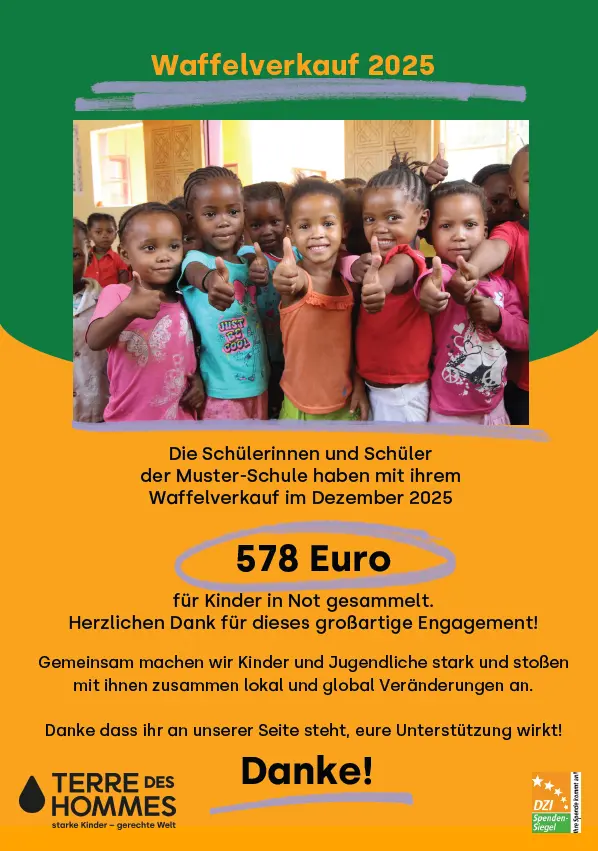
Your donation supports children's rights worldwide
We are delighted when schools support children worldwide and our project work – whether through a sponsored run, a waffle stand in the school hall, or a bazaar in the schoolyard. The students never fail to impress us with their creativity! Are you planning a fundraising event at your school soon? Then please get in touch. We would be happy to support you with information and materials.
Contact usYour contact person

Heike Knöpke
Administrative support for engagement