

Vietnam: Aid for children with disabilities
From 1961 to 1971, the US military used approximately 82 million liters of Agent Orange and other defoliants in Vietnam as part of Operation Ranch Hand. To this day, the effects of this use are still considered a cause of birth defects, cancer, and neurological disorders. Around three million Vietnamese suffer from illnesses attributable to the chemical. In addition to the numerous cases of miscarriages and neonatal mortality, there are approximately 150,000 children born with disabilities as a result of Agent Orange. The number of children with physical and mental disabilities in Vietnam is currently estimated at around 200,000.
Families with children or family members with physical disabilities face greater difficulties making ends meet. At least one family member (usually the mother) must stay home to care for the children, meaning the family loses an income earner. Once a child shows symptoms of illness (typically in the first year of life or the neonatal period), families are forced to sell almost all their assets and farmland to cover medical expenses.
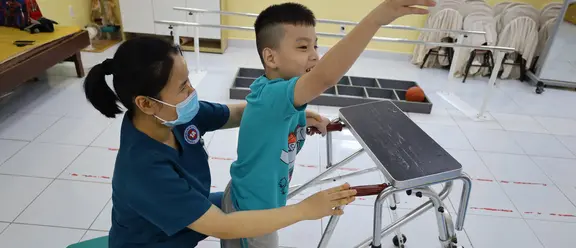
The Ho Chi Minh City Orthopedic and Rehabilitation Hospital (formerly the Centre de Réhabilitation des Enfants Paraplégiques CREP) is the largest center for functional rehabilitation for children with disabilities in Vietnam. Here, children with physical disabilities receive free medical and therapeutic treatment. They learn to use their abilities and are provided with prostheses, walking aids, or wheelchairs. The hospital can accommodate up to 350 children as inpatients.
Also located in the city center of Ho Chi Minh City is the Center for Malnourished Children (CROM). For over 30 years, this center has provided inpatient care for malnourished children. Poverty, especially in rural areas, is the cause of their malnutrition. The children suffer from respiratory illnesses, skin diseases, and paralysis. The CROM staff nurse the children back to health with patience and love. They also consult with parents about what needs to be done to ensure that everyone has enough to eat in the future. Public education, training and further education of specialists and work in rural areas are another important task of CROM.