

Interview:
"Defending nature means defending our land."
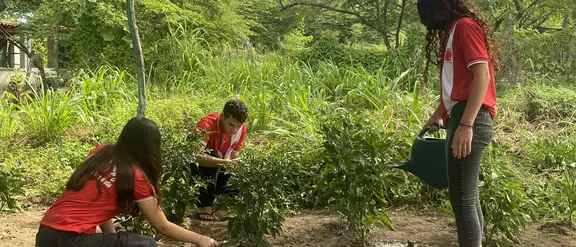
The Landless Workers' Movement (MST) is the largest social movement in Brazil. It advocates for agrarian reform and the redistribution of unused land to landless families. In our joint project with the MST and the Instituto Cultivar, we promote agroecological education and practice in 17 schools and communities in rural areas.
What does agroecological education mean and why is it so important that children and young people are actively involved in the fight for justice? We spoke about this with João Vitor and Clara Duarte, two young participants in our project, as well as with Maria Leomar, one of the coordinators of the education sector at MST.
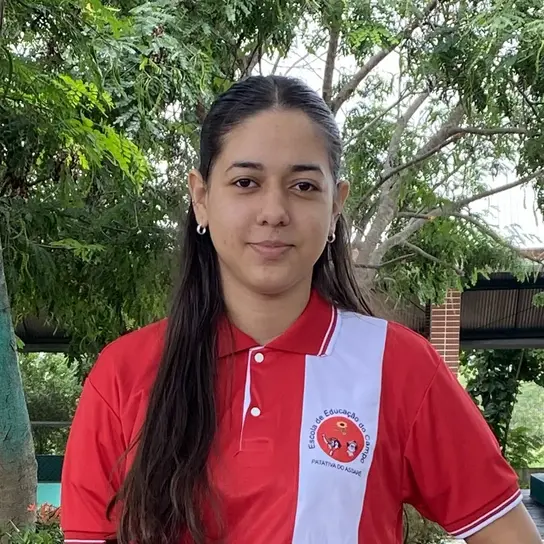
"The situation is very unfair. Hard-working people don't have a piece of land to provide for themselves and their families."
Brazil is among the countries with the greatest land inequality worldwide. How does this affect people's daily lives?
Clara Duarte: “The situation is very unfair. Hard-working people don’t have a piece of land to provide for themselves and their families. I see people moving away and leaving their communities to seek a better life elsewhere. Some schools in some communities are even being closed to drive families away from the land. Our school is therefore also a form of resistance.”
Maria Leomar: “I experience this reality firsthand: 24,000 hectares of land were in the hands of a single person. Today, after many struggles, 766 families have settled here. These are people who now have their own land, an income, and access to services such as schools, roads, and healthcare, and can therefore lead a dignified life. Agrarian reform is the only way to democratize land and guarantee farming families a life of dignity.”
Why are you advocating for agricultural reform?
Maria Leomar: “The concentration of land leads, among other things, to monoculture farming. Production is primarily for export, and pesticides are used intensively. This makes people sick and destroys our environment. In practice, the agrarian reform stipulates that all families have the right to housing, a piece of land to cultivate, an income, healthcare, and education – all while respecting nature and producing healthy food.”
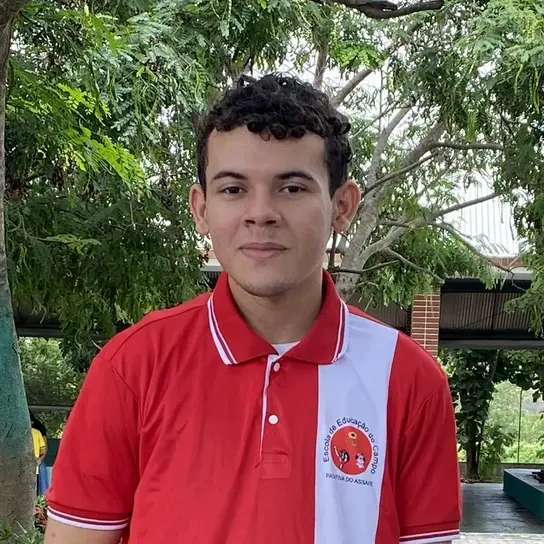
"We young people are part of the fight against inequalities. We want people to be able to live and learn in rural areas."
What does your daily routine look like at the project school?
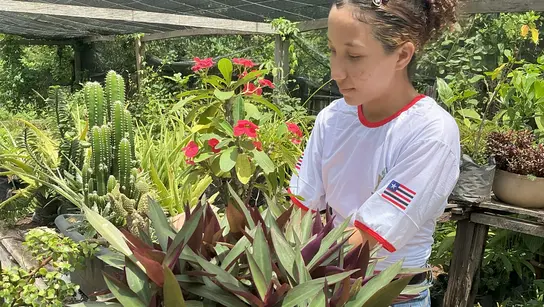
Clara Duarte: "For example, we learn through working in the school garden. There, we combine mathematics, physics, chemistry, and geography with practical activities. We practice different forms of sustainable agriculture and learn how to protect nature. I bring a lot of practical experience home and then explain it to my family, for example, composting and seed care."
João Vitor: “In the Núcleos de Base, our solidarity youth groups, we learn teamwork. We plan joint projects such as creating and maintaining new school gardens. For me, the most important thing is the sense of community, because only together are we strong.”
In our joint project, young people are the agents of change. Why is this so important?
João Vitor: "What we learn in the project helps ensure that future generations don't have to leave the country and abandon their roots. We young people are part of the fight against inequality. We want people to be able to live and learn in rural areas."
Maria Leomar: “Children and young people are not only the future, but also the present. The project enables them to act as active participants, from planning to carrying out the activities: planting trees, producing food in gardens, growing grain, caring for animals. All of this contributes to raising awareness and promotes independence and self-confidence, so that the young people are later able to participate in building a more just society.”
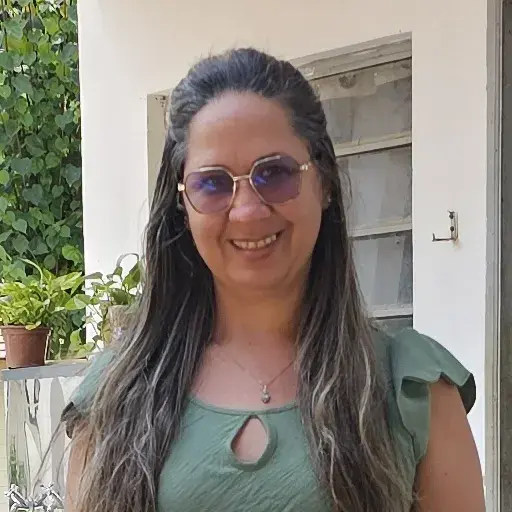
"We must overcome the exploitation and concentration of land, knowledge and technology in the hands of a few."
What needs to change in politics and how can people in Germany support you?
João Vitor: "Defending nature means defending our land. Solidarity is incredibly important in this. What everyone can do: Share our stories and connect with us through concrete actions."
Maria Leomar: “We must overcome the exploitation and concentration of land, knowledge, and technology in the hands of a few. This is a reality in Brazil and in the world: some countries become rich by destroying Brazil’s natural resources, and this is linked to the way things are produced globally. Other countries can help to denounce this profit-driven mode of production. Everyone can examine how their own country contributes to this inequality and help to expose this logic of our society.”
Clara Duarte: “The situation in Brazil will only change when wealth is redistributed. For us, land is the greatest wealth. One way to provide support is through technology sharing and partnerships to help families compete with agribusiness without producing toxins and destroying nature.”
More about the project
Our project with the Landless Workers' Movement (MST) and the Instituto Cultivar provides agricultural and environmental education in schools and communities. The aim is to combat poverty, improve food security, protect local ecosystems, and contribute to the implementation of a just agricultural reform.
Learn more