

Philippines: A fair chance for children on the streets of Manila
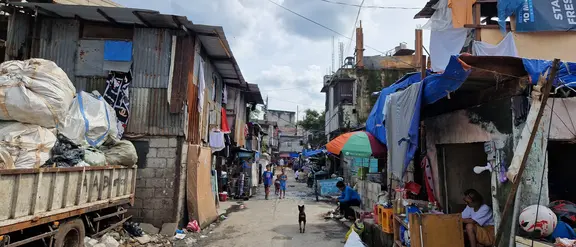
"Happy Land." That's what people call Manila's most notorious slum. The irony is bitter: in Cebuano, "Hapilan" means garbage dump – and the settlement is located on the site of a municipal landfill. Hygiene and housing conditions are catastrophic. Children here have to fend for themselves from a young age, providing food or earning a little money. Schooling and vocational training? Unthinkable for many.

Approximately 80,000 children in the Philippine capital Manila are homeless or live in housing situations that force them to spend a large part of the day on the street: in tents or self-built huts, in the dead corners of the city, in slums like "Happy Land".
Together with its partner organization "Bahay Tuluyan" Terre des Hommes is committed to ensuring that they have a fair chance at education and training – and that one day they can leave poverty behind.
Social workers travel directly to the children who need help most in a dedicated mobile outreach van. They offer play and information sessions and listen to the children's worries and hopes. The core of their work is social counseling, which seeks solutions on a case-by-case basis: What does the child need to grow up healthy and be able to learn?
The most important step is often simply getting the children to attend school: Staff members help with things like obtaining a birth certificate, school supplies, or subsidies for school uniforms. Older children are also given the chance to receive a scholarship.

"I learned to read and to paint with colors. I like to paint horses the most. But we also love to sing and to act in plays."
"The social workers help me learn more about myself and my rights. Where I am safe and where I am not, and what I can do if I feel threatened."
"We learn to read and write and other things you need for life. I also like the swing at Bahay Tuluyan's."

"Bahay Tuluyan" means "House of Refuge." For children who spend a lot of time homeless on the streets of Manila, the organization provides a reliable point of contact. Here, in Bahay Tuluyan's "drop-in area," the children find a safe space to play. There is a toilet, a shower, clean drinking water, and, if needed, healthy meals—things that are otherwise unattainable for most. The drop-in area also includes a counseling center where the children can find a listening ear and support.
Bahay Tuluyan ensures that older teenagers have a fair chance at vocational training: Around 130 children over the age of 15 from disadvantaged backgrounds participate in long-term learning and training programs with the help of the organization. The young people learn about gastronomy and self-employment in the organization's own café, or they master the basics of agriculture in garden plots – naturally, in return for fair compensation. It pays to persevere: The more experience the young people gain, the higher their pay.

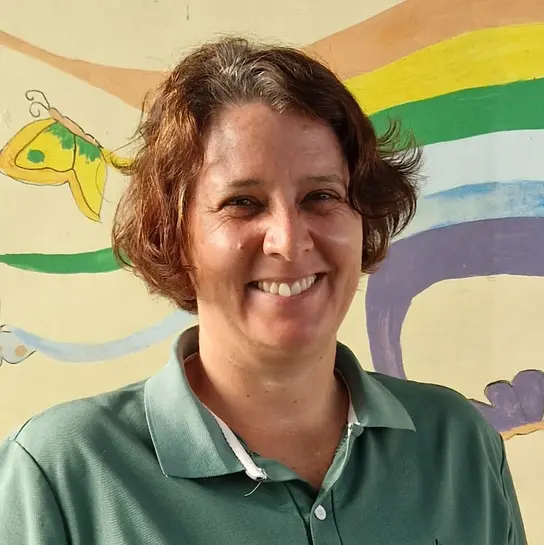
"The most important thing is to offer children ways out of dangerous situations, to show them a future away from the streets, and to give them the foundations for an independent life. This starts with simple things like fairness and reliability."
A new home with Bahay Tuluyan: Chabeng and Agatha in an interview

By 2025, Bahay Tuluyan had reached, advised, and supported approximately 1,000 children and young people on the streets of Manila. For the current 60 children between the ages of 3 and 18, however, the "House of Refuge" is quite literally a new home: they have found shelter in the organization's residential program.
Terre des Hommes interviewed two of them, Chabeng and Agatha, in October.
About the interview23.03.2026