

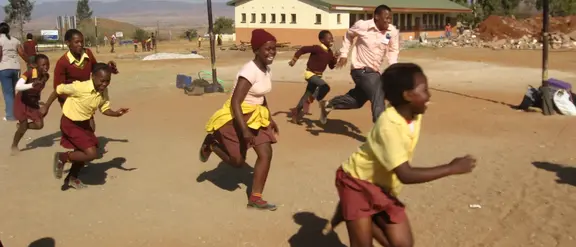
Children have a right to play, and play is essential for a child's development. However, for many children worldwide, play is not a given. Your donation supports projects that give girls and boys the opportunity to play and participate in sports in a safe environment, laying the foundation for their development.
Your donation helps!
Projects
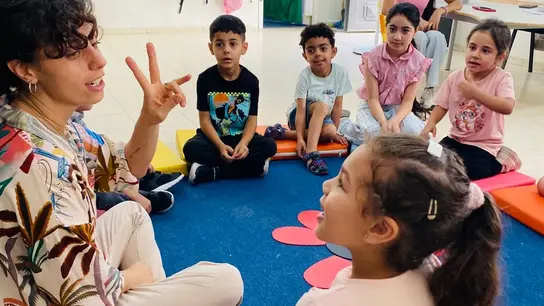
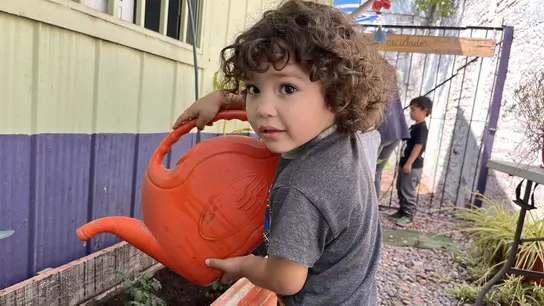

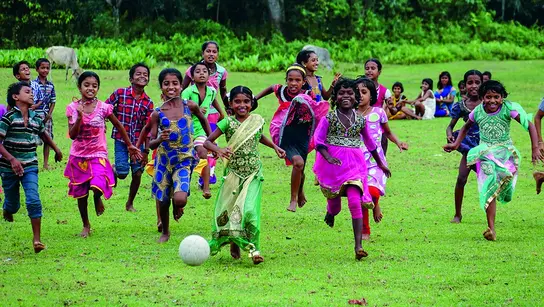
Children's right to play - facts and figures
Playing games can help to cope with life's situation
Children have a right to play. This is enshrined in the UN Convention on the Rights of the Child . However, play is not a given . Yet, the experience of play is of great importance for a child's development: play can help children growing up in poverty to better cope with their circumstances. Through playing together, children learn that there are rules that benefit everyone and prevent conflicts, and that a team is successful when it utilizes the strengths of all its members.
193 states have ratified the UN Convention on the Rights of the Child. Article 31 states that
- The right to play is a human right that every child has
- Governments respect and promote this right
- Anyone who prevents children from playing is violating a human right!
Children who can play and participate in sports also find it easier at school, as their learning abilities demonstrably improve. Play as a therapeutic method can even help overcome traumatic experiences. Every child possesses talent and creativity. Terre des Hommes promotes sports and play activities as a tool for empowering children through its projects.
There are no global studies examining children's play situations worldwide. However, numerous facts show that play is not a given for children – even in industrialized countries.
- In many developing countries, only a minority of children under six years of age have access to early childhood education programs and kindergartens where they are supported in their development with suitable play opportunities and adequately prepared for later school attendance (in South Africa around one in five children, in Mozambique less than ten percent).
- Millions of boys and girls who are victims of exploitative child labor are deprived of the right to play and thus to be children.
- Mobile phones, tablets, iPhones, and other technological "toys" influence children's development. They can lead to stunted physical and emotional development and impair social skills. This can result in motor deficits, early-onset myopia, obesity, learning difficulties, and problems in relationships.
- Ignorance of the importance of play for a child's development leads to play and sport being seen as secondary or even as a "superfluous" luxury.
- Increasing demands and performance pressure at school reduce free playtime. A lack of safe play areas prevents children from playing carefree outdoors and exploring their surroundings.
Demands and goals
Terre des Hommes as an advocate for the right to play, campaigns for the protection of children and young people from sexual orientation to sexual orientation
- Play is not considered subordinate to other rights, as it is essential for the well-being of children.
- Governments should take their responsibility for implementing Article 31 of the UN Convention on the Rights of the Child more seriously. (For further details, see also the document General Comment on the Convention and the Right to Play ( PDF document ))
- The creation of play opportunities is integrated into budget planning and government services (development of infrastructure, measures in the education and health sectors, etc.)
- Parents, teachers and other caregivers should be informed about the importance of play for a child's development and that play opportunities do not depend on financial resources
Terre des Hommes promotes the right to play
Project partners around the world organize play opportunities and activities for children – in safe places, with good play materials and dedicated supervisors.
Only governments, states, and the international community can enforce and guarantee the right to play for all children. That is why Terre des Hommes together with partner organizations, acts as an ambassador for the right to play – both nationally and internationally.
In many projects, play is part of the educational and therapeutic offerings: in refugee camps, for street children, and in emergency and disaster relief. Play helps children in difficult life situations.
Parents and teachers receive training from Terre des Hommes partner organizations: They learn how important play and sport are for the healthy development of children. And they learn how suitable play areas and opportunities can be created even with limited resources.
Your contact person

Claudia Berker
Speaker for the Africa Program