Latin America: Young activists demand climate justice
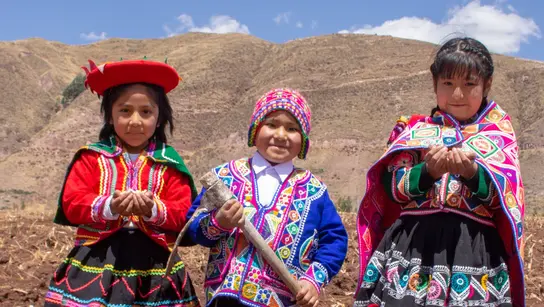
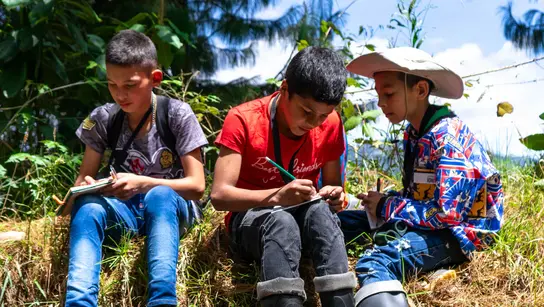
In our climate justice project, young environmental activists from Colombia, Peru and Brazil are committed to the right to a healthy environment.
The following article was written by the youth collective of our partner organization, the Landless Workers' Movement (MST), and first published on their website . It reflects the views of the authors and does not necessarily represent the positions of Terre des Hommes. Photos: Coletivo Nacional de Juventude Sem Terra. Edited by Solange Engelmann.
The youth wing of the Landless Workers' Movement (MST) is intensifying its cooperation on climate justice
We are experiencing a structural crisis of capitalism with economic, cultural, health-related, and environmental dimensions. This crisis is affecting Brazilian agriculture: food is becoming a commodity, nature is being devalued, and young people are being displaced from the countryside. As a result, individualism and the pressure to survive are increasing. They are tearing apart community bonds and offering false "solutions" for young people in rural areas and on the urban peripheries.
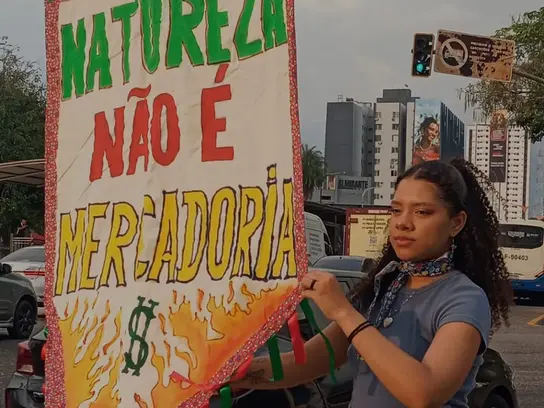
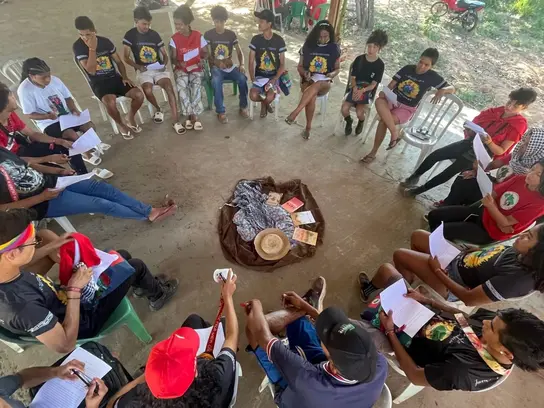
The environmental issue has become central for us, the youth of the Landless Workers' Movement MST (Movimento dos Trabalhadores Rurais Sem Terra), in recent years — both in debates and in practical experiences on the ground.
Together with Terre des Hommes Germany, Censat Agua Viva (Colombia), the Organización Nacional de Mujeres Indígenas Andinas y Amazónicas del Perú, and MOCICC – Movimiento Ciudadano frente al Cambio Climático (Peru), we are developing the project "Climate Justice – Young People of Latin America Promoting Environmental and Climate Justice." The goal is to develop solutions for the environmental and climate crisis in the region.
Regional educational schools and activities in Brazil
The project establishes regional youth education centers in Brazil's five regions. A central theme is the environmental struggle to protect these territories. We are planning 19 political advocacy initiatives across the country. The educational work of these regional youth centers complements numerous initiatives of our movement, deepening understanding and strengthening the agency of those involved in the Popular Agrarian Reform – because "those who know what they are fighting for, fight better.".
The regional schools pursue, among other things, the following goals: strengthening the organization of youth in Brazil, Peru and Colombia through learning and development spaces for practical skills against the climate and environmental crisis; political and ideological education to promote collective strategies and regional networks for climate justice; and strengthening the political influence of youth at the local, national and regional levels in favor of human and environmental rights.
The climate justice project
In our project, young environmental activists from Colombia, Peru, and Brazil are developing practical, community-based solutions to address the climate and environmental crisis, raising awareness, and advocating for compliance with international environmental and climate agreements. The project is being implemented in cooperation with the Landless Workers' Movement (MST) and the Instituto Cultivar (Brazil), as well as the organizations CENSAT (Colombia) and MOCCIC (Peru), and is funded by the German Federal Ministry for Economic Cooperation and Development (BMZ).
Exchange between project partners
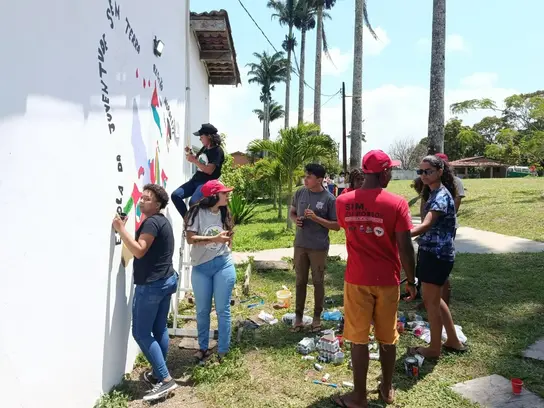
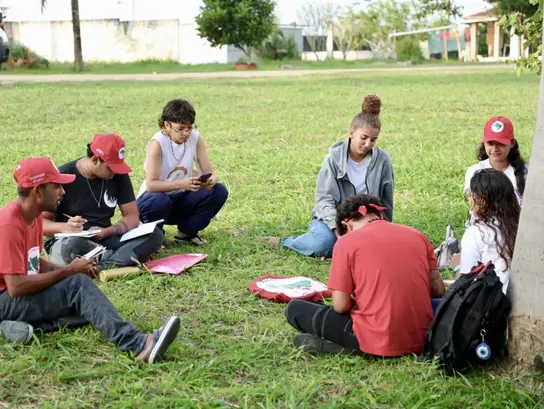
Since the second half of 2024, in addition to the five regional schools, we have hosted exchange participants from our other partner organizations. This provided an opportunity to develop a common regional strategy for the project, introduce the MST, and get to know the partner organizations. At the same time, it allowed for deeper discussions about the concepts of the climate crisis—based on the experiences of young people in their own regions.
The first regional meeting of the "Kofi TDH" project took place from June 2nd to 7th, 2025 in Moreno and Recife (PE). Twelve young people from Brazil, Peru, and Colombia participated. The aim was the exchange of experiences and knowledge through workshops, practical activities, and debates on environmental issues, the climate crisis, and popular organization.
The discussions addressed the connections between capitalism, colonialism, and the climate crisis, as well as challenges and alternatives developed by grassroots movements—such as agroecology, the use of traditional technologies, and climate justice. Experiences of the MST and the other participating organizations were shared to strengthen collective strategies of resistance.
During the meeting, there were thematic plenary sessions, mangrove planting campaigns, visits to agroecological projects, events for World Environment Day, cultural excursions in Recife and Olinda, as well as shared moments for reflection and knowledge exchange.
Educational strategies and regional schools
The educational activities of the MST youth are part of a national process to strengthen youth organizations around agroecology, environmental justice, and territorial protection. The project began with a preparatory meeting in São Paulo, attended by 29 young leaders from 19 states across the five regional zones. Over four days, content, methodology, and organizational strategies for regional schools were consolidated: environmental policy, agricultural and environmental policy issues, territorial conflicts, and water management based on traditional knowledge.
This meeting resulted in the formation of five regional schools, involving a total of 200 multipliers from the five regions. These schools became organizational spaces focusing on political education and strengthening youth resistance against the environmental crisis and the aggressive interventions of capital in our territories.
The educational process combined situation analyses, debates on agricultural and environmental issues, agroecology, and climate change with the collective development of diagnoses and strategies for the territories. Three project activities converged in these meetings: environmental education schools, training on implementing community-based best practices, and training on climate and environmental policy. Between workshops, cultural and mystical moments, and spaces for organized work, the young people strengthened their identity as a fighting force and reaffirmed their commitment to popular agrarian reform, the protection of land, water, forests, and nature, and an emancipatory project for land and society—including the struggle for climate justice.
Our partner – the "Movimento dos Trabalhadores Rurais Sem Terra" (MST) – plays a central role in implementing agrarian reform in Brazil: This rural workers' movement organizes peaceful land occupations, supports land redistribution, and promotes collective agriculture. Education and youth work are high priorities for the MST. The organization directly links educational work with agricultural practice and social mobilization.
The MST originated in the 1970s in southern Brazil as a reaction to the modernization of agriculture, which deprived many farm workers of their jobs through mechanization.
Examples from the regions
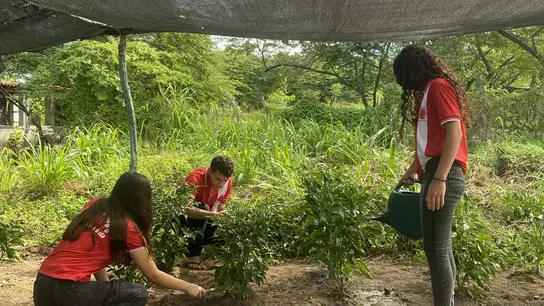
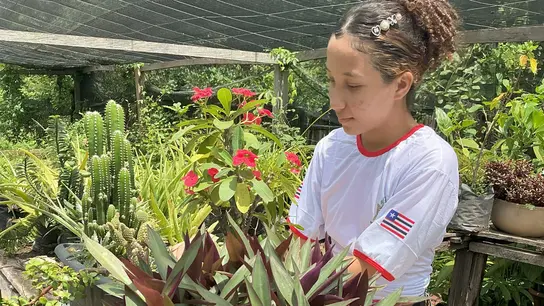
In the northern region, the "Escola Norte de Educação Ambiental e Climática" took place at the Acampamento Pedagógico Oziel Alves Pereira in Eldorado do Carajás (PA). Thirty-five young people from Maranhão, Pará, Roraima, and Tocantins discussed youth issues, popular reform, and the environmental crisis, and carried out symbolic tree-planting activities as well as cultural and commemorative activities—emphasizing the role of youth as guardians of land, water, and forests.
In the south, the regional training course “Che Guevara” brought together 45 young people from Rio Grande do Sul, Santa Catarina and Paraná at the Instituto Josué de Castro in Viamão (RS). Topics included MST history, agricultural and environmental issues, gender, popular communication and agroecology — linked with political education, collective work and cultural activities.
In the southeastern region, 40 young people from Espírito Santo, Minas Gerais, Rio de Janeiro, and São Paulo participated. They held debates on the crisis of imperialism, ideology, the expansion of agroecology, and conducted field visits. The program was based on the methodology of the Brigada Nacional Oziel Alves, an MST initiative for training activists.
In the Central West, 30 young people met in Goiás to discuss climate justice, interpersonal relationships, gender, agricultural issues, and popular communication. Workshops in photography, theater, music, and drawing strengthened organizational skills and youth advocacy in the face of ecological impacts on the country.
In the northeast, educational activities brought together 50 young people from five states. The focus was on agroecology, stewardship of territory, and climate justice. Political education, community-based practice, and debates on environmental policy strengthened the role of youth as multipliers in protecting water, land, and commons, as well as in building agroecological alternatives.
Significance of the project for the youth of the MST
The project “Climate Justice – Young people of Latin America promote environmental and climate justice” plays a central role in the educational work of MST youth because it provides technical and educational support to address the environmental crisis.
The initiative utilizes the knowledge acquired over decades within the movement regarding agroecology and self-organized agriculture, training young people to be active defenders of nature. This training is strategic, enabling new generations of MST to develop practical, sustainable solutions to protect their livelihoods and territories.
In addition to professional development, the project strengthens the political networking of young people through collaboration with indigenous women's organizations in Peru and environmental organizations in Colombia. This regional exchange of experience and transfer of expertise solidifies the shared struggle for climate justice and enables young activists to amplify their influence at the national and regional levels. By integrating young people into an organized and networked structure, the project reinforces demands for comprehensive agrarian reform and environmental protection, increases visibility and political clout, and ensures the long-term sustainability of the Movimentos' social and environmental struggles.