

India: security, protection and training for girls
In Sunder Nagri, a poor neighborhood in the Indian capital New Delhi, something unusual is happening: In the morning, at noon, in the evening and even at night, small groups of girls go with pens and paper through the narrow alleys, through back alleys and courtyards, to bus stops, shops and businesses.
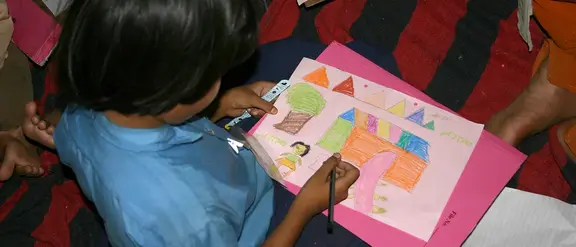
Every now and then they stop, discuss, and write and draw on their notebooks. For the past few weeks, the girls have been researchers: mapping their neighborhood, recording where it's safe for them and where it isn't: Where is it too dark, where would they never go alone, where are girls and women repeatedly harassed? Once a few streets have been mapped, the girls meet in the new community center, a small room with a few chairs and tables and a shelf full of books. They compile their sketches, and page by page, a map of the safe places and routes in their neighborhood emerges. Girls and women in Sunder Nagri are aware of this and avoid certain places and alleys, especially at night. But this is the first time they have gathered information themselves, evaluated it, and made it visible to everyone.
Your support for strong children!
The girls from Sunder Nagri are involved in a new project in northern India. Terre des Hommes partner organizations are building a network there against violence and discrimination: girls and women are being trained to defend themselves. Girls' groups and women's protection committees have already been established in three slums in New Delhi and 24 villages in the neighboring state of Uttar Pradesh.
To ensure local groups are well-prepared for their task and that doors to political decision-makers are opened, many women are contributing: lawyers, academics from six universities, doctors and nurses, teachers, and police officers are supporting the awareness-raising and advocacy work against violence. They will also serve as mentors for individual girls. Over the next three years, the network will further support 300 girls in completing vocational training or pursuing higher education, so that no one can prevent them from leading self-determined lives through violence.

Violence against girls and women…
… happens every day in India. According to a recent United Nations study, almost a third of women suffer physical and sexual violence within marriage throughout their lives. Furthermore, women are not safe in public or at work, and the number of reported harassment and rape incidents is steadily increasing. International media have repeatedly reported on some extremely gruesome cases of gang rape and brutal attacks against women.