

Iraq: Upcycling to combat mountains of trash
In 2018, young activists founded the organization “Youth Speak,” which works with young locals and refugees in northern Iraq. What makes it special is that all projects are developed with and by young people. They want a more sustainable way of life in Iraq and in all countries around the world – and they're starting with themselves.
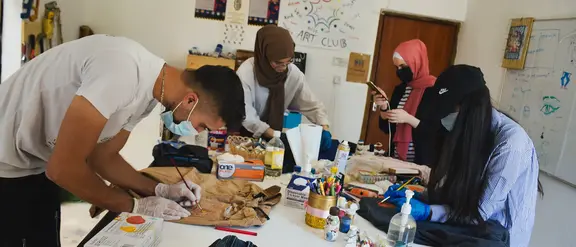
“Upcycling means transforming waste into something new,” explains 24-year-old Haval. He smiles as he points to a small stool he made from car tires in a “Youth Speak” workshop. Unlike in Germany, workshops don't take back worn-out tires. They litter the streets and huge landfills, where they are eventually burned. “In our culture, it's not common to refurbish broken things,” says Haval. It was only in the course offered by Terre des Hommes partner organization in the northern Iraqi city of Dohuk that he and other young people learned how to create new products from waste materials. “For me, it was a completely new experience,” he says.
Your support for strong children!
With creativity and energy
Young people in Iraq, in particular, are eager to tackle the country's problems and bring about change. Waste disposal is one of the many challenges in northern Iraq. The influx of refugees has pushed the already dilapidated infrastructure to its limits, mountains of garbage are growing ever higher in the communities, and residents are overwhelmed by the sheer volume. To raise awareness of this problem and reduce the mountains of waste, the young people involved in "Youth Speak" are getting creative: While some are making furniture from old tires, others are upcycling old clothes, crafting jewelry from fabric scraps or plastic waste, or even building a biogas plant to process organic waste. 24-year-old Hawaa participated in this project and is visibly proud of the result
"It was so easy to build a functioning biogas plant. Now our environment is cleaner and we also save money because we can use the digestate as fertilizer."

The tables and stools from Haval's workshop are also quite impressive. While the recycled furniture, clothing, and jewelry represent only a small fraction of the waste piling up in the country, the workshops are about more than that: they aim to foster a change in thinking. Haval has learned a great deal, and he doesn't intend to stop there. "I want to bring this idea to other areas of life and develop it further," he says. "And I want to encourage other people to do the same."