

Peru: Defying climate change with traditional knowledge
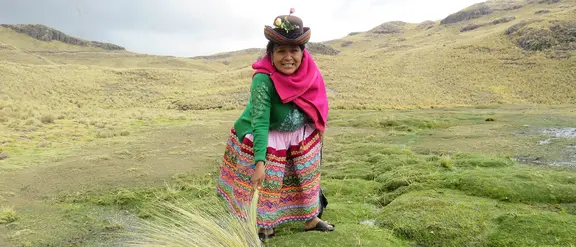
The village of Quispillacta lies at an altitude of 2,500 to 4,500 meters. Marcela and Magdalena Machaca have researched the experiences of small-scale farmers here with local water sources and plants. Now, these findings are securing the food supply for numerous families.
“We live in the mountains, and the snow on the peaks has always been our natural water source. During the dry season, we rely on the streams and springs that appear due to the thaw. But many mountains are no longer snow-covered, and the glaciers are melting too.” Magdalena Machaca is worried. “Climate change is also causing storms and torrential rains. This is leading to crop failures and reduced yields,” she notes. “Many families don’t know if they will have enough to eat throughout the year.”
Your support for strong children!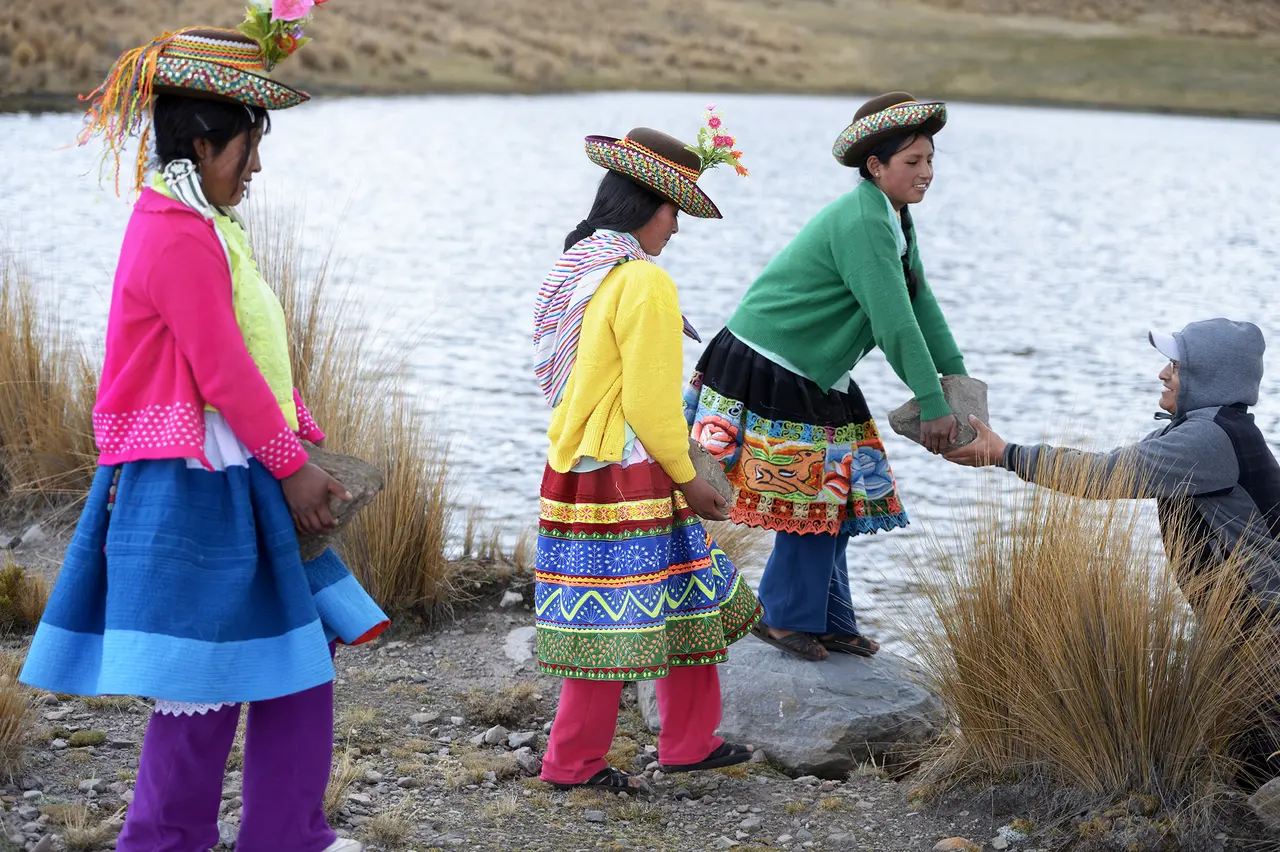
The effects of climate change are causing severe hardship for the people of the Andes. But Quispillacta, the home community of Magdalena and Marcela Machaca, is comparatively well-off. In 1991, after completing their studies in agricultural science, the two sisters founded the "Asociación Bartolomé Aripaylla," or ABA for short. A year later, they began receiving support from terre des hommes . The Machaca sisters rely primarily on the traditional ecological knowledge of the indigenous communities to improve water management and thus crop yields.
“We spoke with the elders to find solutions to the problem of droughts,” recalls Magdalena Machaca. “And we discovered ‘qucha ruway’ – a practice that allows rainwater to be stored in lagoons while simultaneously preserving nature and biodiversity. We use clay, stones, and plant material for the dams. Certain algae promote seepage. Everyone helps with the construction, including the teenagers and children.”
"We have become more resilient to climate change."
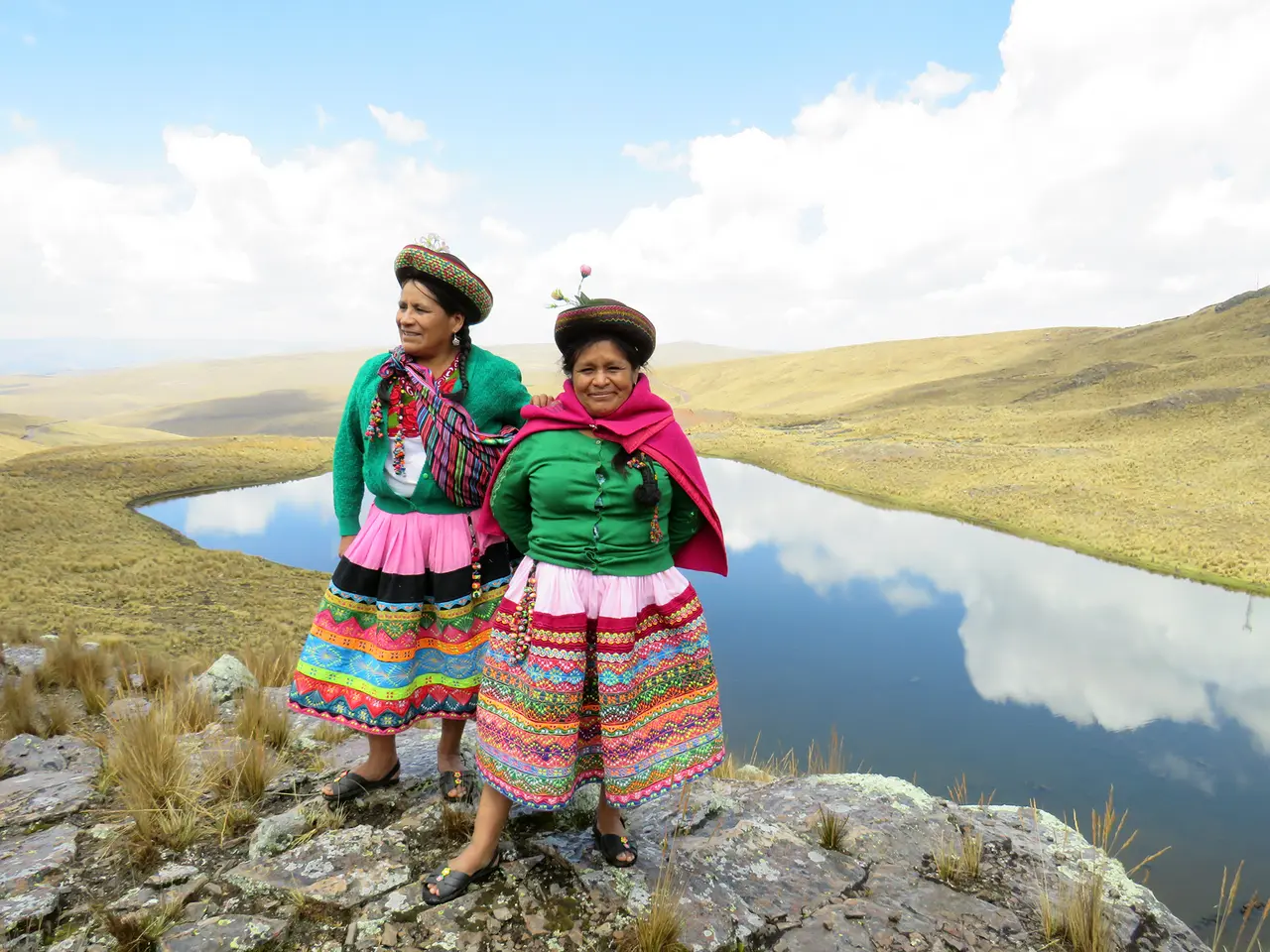
ABA, together with the village communities, has now created more than 120 ponds and reinforced their banks to capture torrential rains. The water seeps deep into the ground and replenishes the groundwater reserves. The putaqa plant, with its long roots, draws the groundwater to the surface where it is needed. Many families have created such a "putaqa spring." "The lakes can at least partially
replace the ecological function of the vanished glaciers," Magdalena says proudly. "This means that farming families can maintain their food production even during periods of drought. We have become more resilient to climate change."
Thanks to ABA, the issue of rainwater harvesting has now entered Peruvian politics. Several regional governments have recognized the success of the measures and decided to implement the ABA concept in other parts of Peru. Thus, the work of ABA and Terre des Hommes extends far beyond Quispillacta.
Since 2022, the logistics company Dachser SE has supported the project, among other things with the aim of training young people as community advisors. These advisors are to pass on rainwater harvesting techniques to their peers in other districts and provinces who are not directly involved in the project, thus contributing to solving the problem of water scarcity.