

Ukraine: Support for young democratic engagement
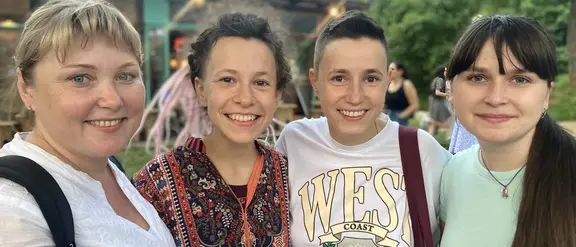
What comes after a youth spent in war? The organization STAN supports committed young people in laying the foundations for a future in a free and democratic Ukraine. Many are internally displaced persons hoping for the reconstruction of their hometowns.
The war across Ukraine has now lasted for more than three years. Russia's relentless attacks also mean that a generation of teenagers and young adults is growing up with the experience of war, destruction, displacement, and uprooting.
While the fighting has had serious consequences for virtually all segments of the population, adolescents constitute a particularly vulnerable group. For many, their immediate, foreseeable future lies in the army. Many others face uncertain educational paths while assuming roles far too early that would normally be filled by adults. They care for siblings on their own, take on jobs, help with reconstruction efforts, or distribute aid. Their parents are fighting on the front lines, have been forced to remain in other parts of the country, or have been killed in the war.
Most young people are grieving or worried about friends or relatives, often separated from them by the military front. Very few have the opportunity to develop according to their age, to cultivate their own ideas, and to make plans for the future. For everyone, it is all the more important not to lose sight of what their hopes rest on after the war ends: the dream of a free, safe, and democratic Ukraine.
The foundation of a democratic future
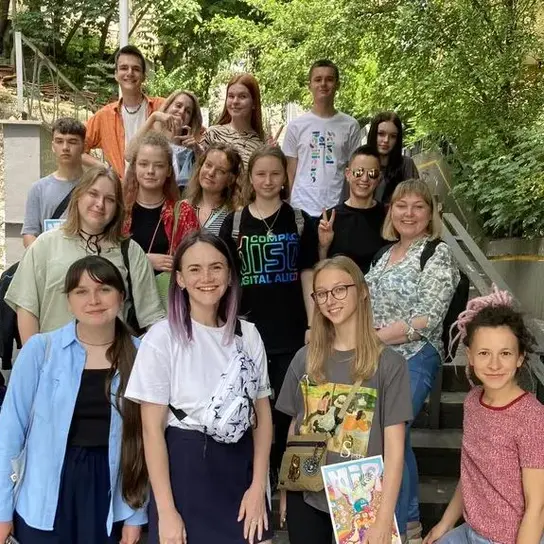
Terre des Hommes partner organization, STAN, is working to provide support and new points of contact for some of these young people. To this end, a network of committed young people is being built who are already proactively advocating for participation and democracy. Participants learn about youth activism and human rights, conflict resolution and transitional justice, equality and tolerance, minority and LGBTQ+ rights, diversity, inclusion, and intercultural dialogue. STAN supports eight grassroots initiatives promoting social cohesion in western Ukraine. Participants can also find support for their mental health if needed.
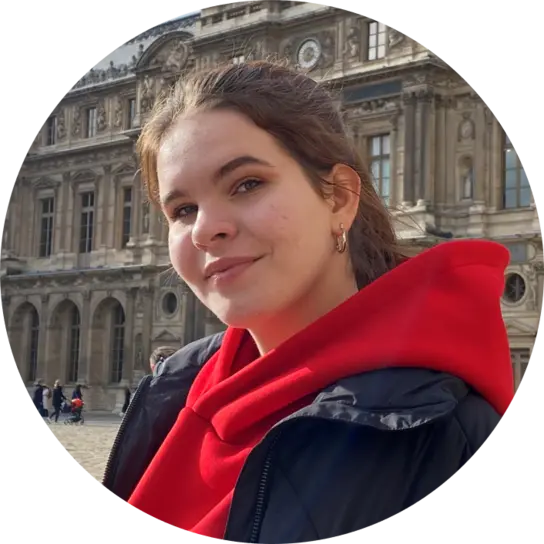
“I know that it might take years before many of the ideas we have are finally implemented,” says Kateryna Shulakova, one of the participants in STAN. The computer science student in Kyiv has submitted a project idea for a decolonization forum – in her home region of Luhansk, which is now largely under Russian occupation.
»These are thoughts for the distant future, but they are so important to me. I used to dream of moving to a bigger city. Now that I'm in Kyiv, I truly understand the value our words can have at the local level. We have the greatest influence where we have spent most of our lives
Young people like Kateryna make up the largest group of STAN participants: youths who have been displaced within Ukraine, often from the south or east of the country. The project is primarily implemented in Volodymyr, near the Polish border, one of the cities and regions that have experienced a massive influx of internally displaced persons since 2022.
"Many people want to return."
A second focus of the project is therefore dialogue with and acceptance of cultural minorities, conflict prevention, and the promotion of understanding between different groups and generations. It offers a glimpse of a diverse, multicultural future. And at the same time, it's a snapshot: Many internally displaced people hope that one day they will find their way back and be able to rebuild their hometowns.
“Many young people have moved to new cities, new countries. But our task is to ensure there’s a place they can return to, a place with prospects,” said Kateryna. “For my parents, for the people I know… For all of us, it would be so important to come back and rebuild the city. Many people want to return. I hope for the best. I hope that someday it will come true.”
Help with a donation